Remembering Sir Angus Stirling (1933–2026)
By the Royal Ballet and Opera
Tuesday 2 June 2026
The Royal Ballet and Opera is deeply saddened by the death of Sir Angus Stirling, who died on 1 June 2026 at the age of 92.
Sir Angus served as Chairman of the Royal Opera House from 1991 to 1996, bringing to the organisation a characteristically thoughtful, diplomatic and quietly authoritative style of leadership at a moment of considerable institutional challenge and change.
His chairmanship coincided with a period in which the Royal Opera House was navigating increasing financial and organisational pressures, alongside wider debates about the future of arts funding and access in the United Kingdom. Drawing on his extensive experience in the cultural sector, Sir Angus played an important role in guiding the organisation through this complex landscape, combining a firm commitment to artistic excellence with a pragmatic understanding of governance and sustainability.
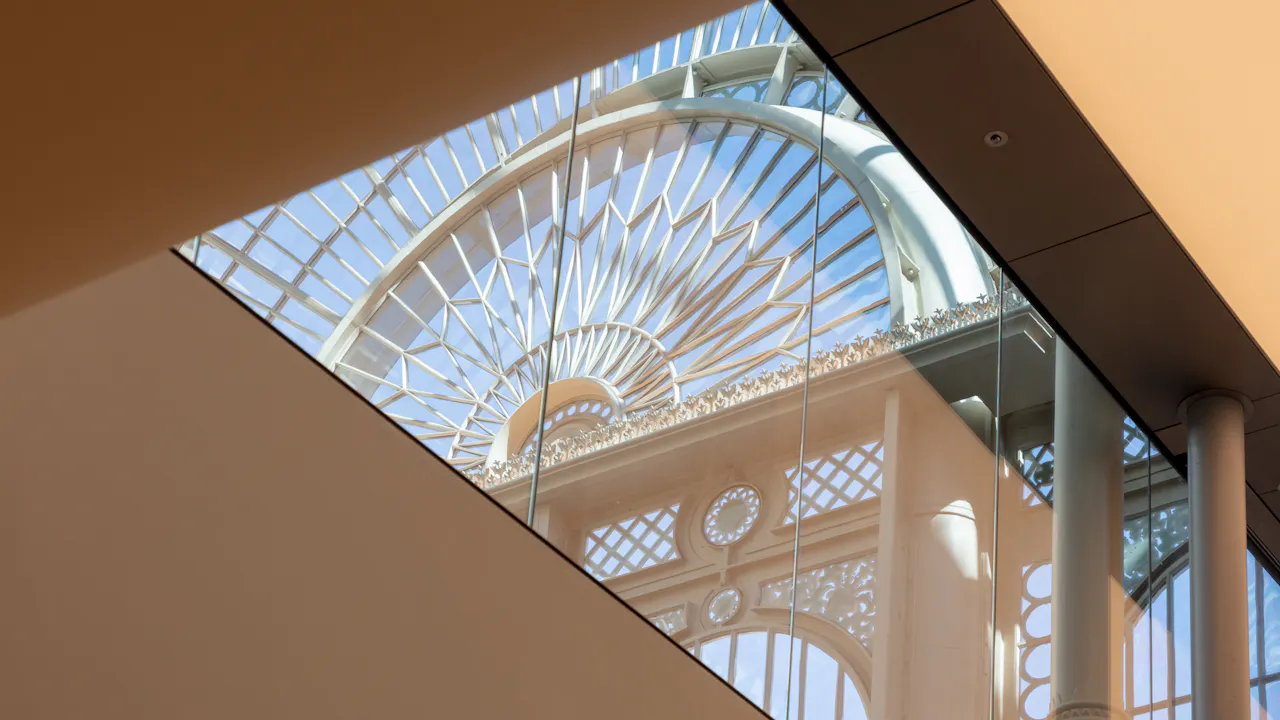
It was during Sir Angus's chairmanship that the Royal Opera House was awarded a National Lottery grant to fund the major late 1990s redevelopment of the Covent Garden site. This grant – and the philanthropic donations of many others, including Lord and Lady Sainsbury – allowed for the creation of the Linbury Studio Theatre, the restoration of the iconic Floral Hall, and other major structural improvements, alongside expanded backstage facilities, and refurbishments to the main auditorium.
Colleagues at Covent Garden recall his steadiness of judgement and his ability to build consensus across trustees and executives, artists and external stakeholders alike. He brought to the role a deep belief in the long-term value of the Royal Opera House as a national institution, and in the importance of maintaining confidence in its artistic mission.
Beyond Covent Garden, Sir Angus was one of the most influential figures in British cultural life of his generation. He served as Director-General of the National Trust from 1983 to 1995, overseeing a period of significant growth in membership and major acquisitions of historic houses, landscapes and coastline. Earlier, at the Arts Council of Great Britain, he was an advocate for the principle that the arts should be supported at arm’s length from government, with a primary focus on enabling artists and cultural organisations to thrive.
Educated at Eton College and Trinity College, Cambridge, Sir Angus later took a Diploma in the History of Art at London University as an extramural student. He was an Honorary Fellow of the Courtauld Institute of Art and Trinity Laban Conservatoire of Music and Dance, and trained as an artist at the Lydgate Art Research Centre, exhibiting his work in London and Somerset. Alongside his major appointments, he contributed to a wide range of cultural organisations, including the World Monuments Fund, and was widely respected for the generosity with which he gave his time and expertise.
At the Royal Opera House, his leadership was marked by a clear-sighted appreciation of the institution’s place within both the national and international cultural landscape. He understood the need to sustain world-class opera and ballet while ensuring that the organisation remained responsive to changing expectations around accountability, access and public value. His period as Chairman helped steady the organisation during a challenging period and to reinforce the foundations on which its later renewal would be built.
Sir Angus was also a painter, and throughout his life retained the sensibility of a practising artist alongside his distinguished administrative career.
He is remembered with great affection and respect by all who worked with him. Our thoughts are with his wife, Morar, and his family.