Opera Essentials: Samson et Dalila
When Samson falls in love with Dalila, his strength – both physical and spiritual – is put to the test.
Camille Saint-Saëns’s grand opera Samson et Dalila tells the biblical tale of Samson, the leader of the oppressed Hebrews, who falls in (forbidden) love with Dalila (sometimes known as Delilah), a Philistine woman. Samson possesses superhuman strength, but his passion for Delilah leads to his downfall. Shorn of his hair and his power, he prays to God in despair. His powers are restored and he brings destruction down upon the hedonistic Philistines.
Although originally composed as an oratorio (a large-scale music drama for concert performance), its dramatic story, with its themes of love versus duty and hedonism versus spirituality, not to mention its stunning music, destined it for the operatic stage. Read on to find out more about Samson et Dalila, including Dalila’s famous aria, ‘Mon coeur s’ouvre à ta voix’.
Watch on stage
Quick Facts
What is the story of the opera Samson et Dalila?
Samson, the leader of the Hebrews, rouses his people to war against their oppressors and kills Abimélech, a Philistine. The High Priest urges Dalila, Samson’s lover, to avenge their kinsman’s death. She seduces Samson. While he sleeps, she cuts his hair (the source of his superhuman strength), and Philistine soldiers capture and blind him. As the Philistines worship their god, Dagon, in a wild celebration, Samson prays to God to restore his strength. His wish is granted, and he destroys the Philistine temple, crushing everyone within.
Who composed the opera Samson et Dalila?
French composer Camille Saint-Saëns began composing Samson et Dalila in 1868, but it didn’t receive its premiere until 1877, in Weimar, where it was conducted by Franz Liszt. Saint-Saëns is best-known as the composer of The Carnival of the Animals, the Danse macabre and his Organ Symphony no. 3.
When is Samson et Dalila set?
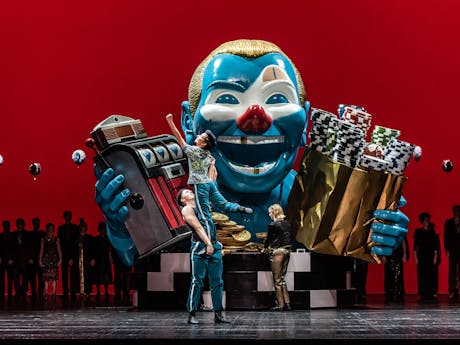
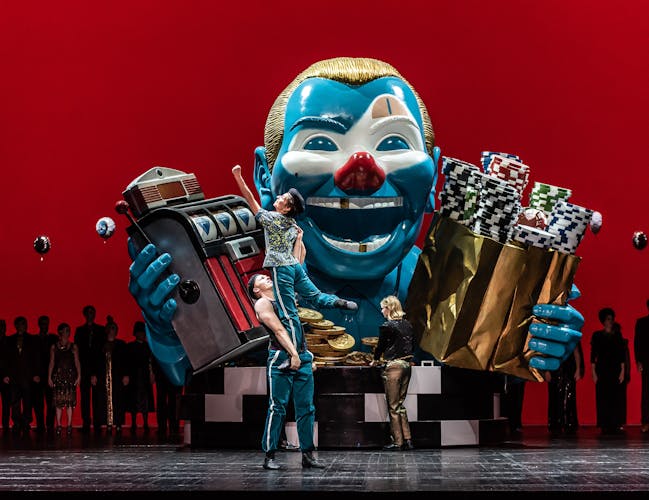
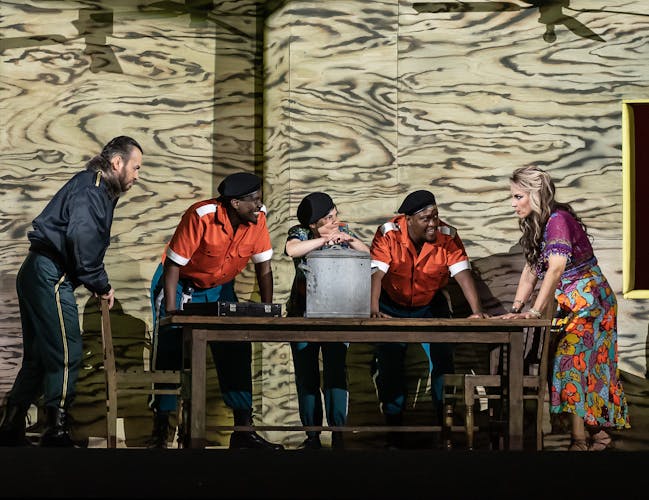
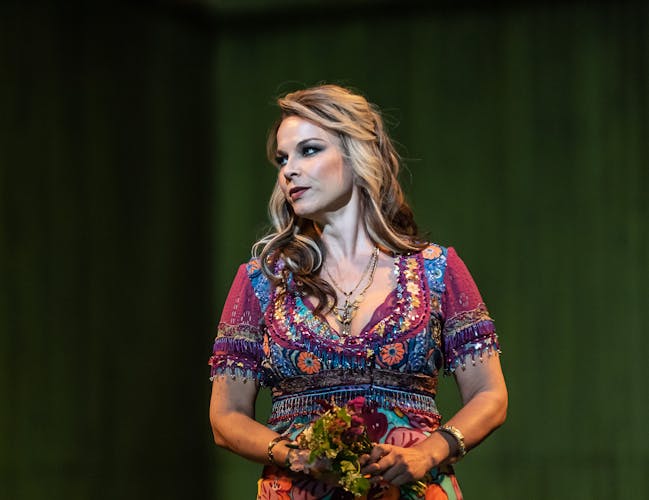
The story is set in 1150 B.C., in Gaza. The biblical story can be found in the Old Testament, chapters 13-16 in the Book of Judges. Richard Jones’ production adds a vibrant, modern twist to the story, with colourful sets portraying the heat and sensuality of the story, and glitzy, glamorous costumes for the Philistines.
What is the famous song from Samson et Dalila?
The most famous song from Samson et Dalila is Dalila’s aria of seduction, ‘Mon coeur s’ouvre à ta voix’, from Act II. With its soaring, expressive melody, the aria is popular as a standalone concert piece, showcasing the range of the mezzo-soprano voice. The frenzied orchestral Bacchanale from Act III is also a popular orchestral showpiece in its own right.
What is Grand Opera?
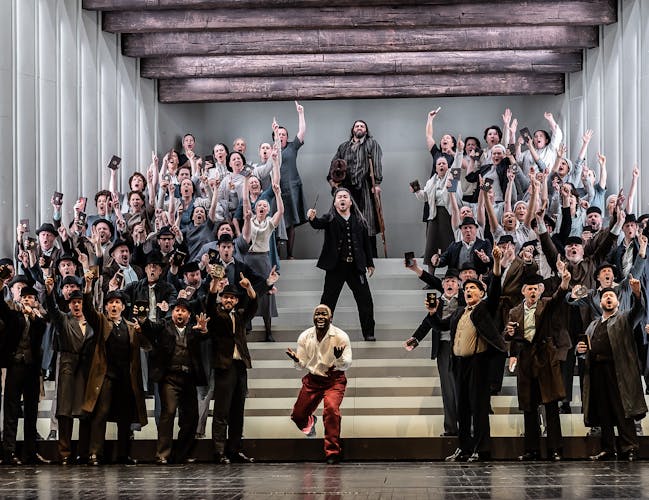
Grand opera is a type of opera which emerged in France towards the end of the 19th century. As theatre technology became more sophisticated, opera productions became more extravagant, with monumental sets, huge forces and opulent costumes. Although typically characterised by a 5-act structure, Samson et Dalila has only three Acts. Yet what it lacks in running time, it makes up for in scale: the opera has a huge chorus and orchestra, and the Act III Bacchanale would have been a showcase for a troupe of ballet dancers. In Richard Jones’ production, professional dancers are joined by the Royal Opera Chorus in a glittering line-dance before the idol of Dagon.
Who was Camille Saint-Saëns?
Saint-Saëns was a French composer, pianist and organist, best known today for his Carnival of the Animals and his Symphony no. 3 (the ‘Organ’ symphony). He had wide-ranging cultural interests and travelled widely, and aside from being a prolific composer and virtuoso musician, he also spoke many languages, wrote poetry and plays, and studied astronomy, geology and classical literature. Samson et Dalila was one of 12 operas he composed in his lifetime, but it remains his best-known work for the opera stage.
Synopsis
ACT I
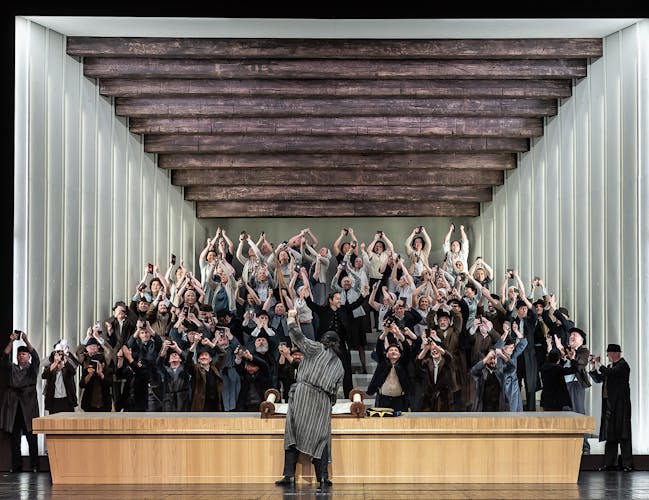
The Hebrews beg Jehovah to free them from their oppression by the Philistines. Samson chastises his people for their lack of faith, and rouses them to war. Abimélech, a Philistine commander and kinsman of Dalila, denounces the Jews and their God. Enraged by this insult, Samson kills him. The High Priest of Dagon curses Samson and his strength. The Jews celebrate their victory. Samson sees Dalila, his lover. Samson’s Rabbi warns him against returning to Dalila.
ACT II
Urged to vengeance by the Philistines and the High Priest, Dalila resolves to betray Samson. A storm is brewing when Samson arrives, consumed with his passion for Dalila. She accuses him of inconstancy, and demands he prove his love for her by revealing the source of his strength. Samson hears a warning from God in the sound of the thunder – but ultimately gives into Dalila’s seduction. Philistine soldiers capture and blind Samson.
ACT III
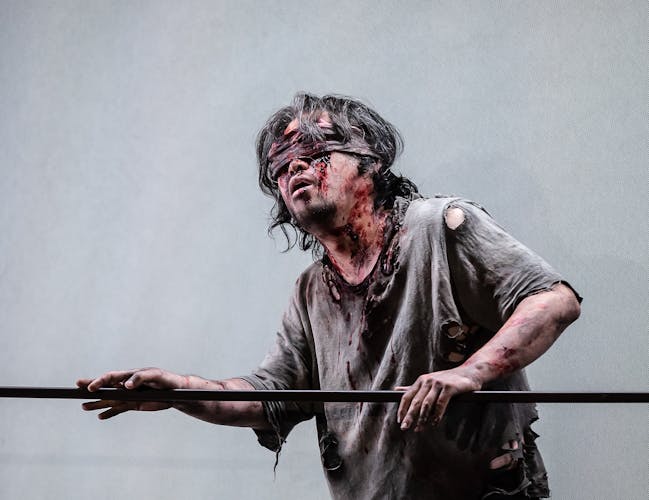
Alone and imprisoned, the blinded Samson is racked with guilt and remorse. He prays for his people whose voices he hears, raised in anguish against him. Samson is paraded before the Philistines. In the temple of Dagon, the Philistines worship their god. As their celebrations turn into a wild Bacchanale, Dalila and the High Priest taunt Samson, demanding he kneel before a statue of Dagon. Samson prays to God to restore his strength. His wish is granted: with a mighty effort, he destroys the temple, crushing everyone within.
Characters
Samson – Tenor. The leader of the Hebrews
Dalila – Mezzo-soprano. A Philistine woman.
High Priest of Dagon – Baritone. The Philistines’ spiritual leader.
Abimélech – Bass. A Philistine man, and Dalila’s kinsman.
Gallery
History
French composer Camille Saint-Saëns began writing his opera Samson et Dalila in 1867. It started life as an oratorio, but the librettist, Ferdinand Lemaire, insisted that the story merited the full-blown drama of grand opera. Early workshops of the first two Acts took place in 1870, but French theatres were reluctant to stage an opera with a biblical subject (despite many precedents). The opera struggled to find willing backers in France. It wasn’t until 1877 that the opera was premiered, thanks to the support of Franz Liszt who oversee the premiere in the city of Weimar. The opera wasn’t performed in Paris until 1892, and the first UK production took place in 1903.
Watch more
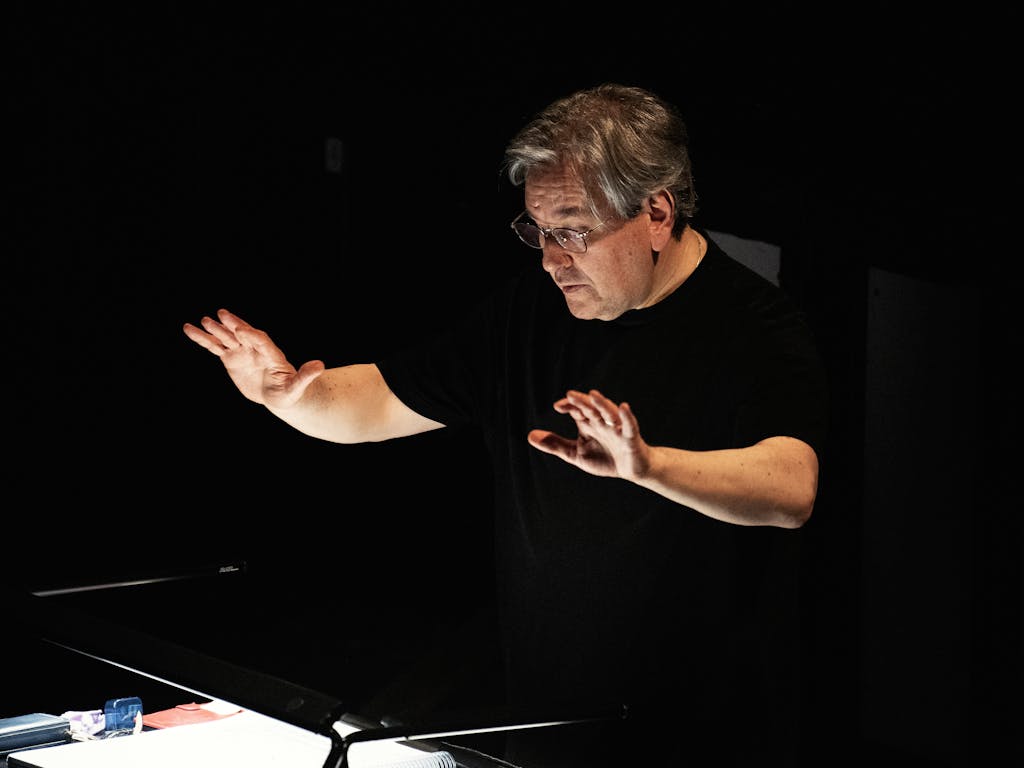
Samson et Dalila (2022): Insights
Explore Richard Jones’s lavish production of Samson et Dalila.
Music
Dalila’s aria, ‘Mon coeur s’ouvre à ta voix’, is the most famous aria from Samson et Dalila. It follows a simple structure, a repeating verse-chorus pattern. The beauty of the melody, which begins softly, summons an alluring, poetic vision: ‘My heart opens at the sound of your voice, like flowers open to the kiss of the dawn.’ As Dalilah’s plea for Samson to embrace him becomes increasingly impassioned, the melody soars higher and higher. By the end, he is conquered, calling out her name, and declaring his love for her. A true operatic seduction.
Samson’s aria, ‘Vois ma misère, hélas’, is a powerful portrayal of Samson in his darkest hour of despair. Blinded and imprisoned, stripped of his powers and ashamed of his failures, he cries out to God to pity him in his weakness.Plangent woodwind melodies and anguished strings accompany Samson’s heartfelt plea of unworthiness to heaven, while in the background, a chorus of Hebrews blames Samson for their downfall.
Ballet aside, the Act III Bacchanale is a dazzling showcase for the orchestra. On stage, the Philistines whip themselves into an orgiastic frenzy of worship before the idol of their god, Dagon. In the orchestra pit, the piccolo sets off aninfectiously catchy tune whose irrepressible energy ripples out into the strings and brass. Quasi-‘exotic’ melodies proliferate in the score as Saint-Saëns evokes the hedonism of the Philistines, and the dance ends with a dizzying flourish.
Gallery
In popular culture
The original biblical story can be found in the Book of Judges in the Old Testament. The story has inspired a plethora of artworks, ranging from masterpieces by Rubens and Van Dyke in the 17th century, drawings by Gustave Doré in the 19th. In film, Cecil B. DeMille’s 1949 film Samson and Delilah stars Hedy Lamarr and Victor Mature, while Elizabeth Hurley plays Delilah opposite Eric Thal’s Samon in a 1996 mini-series. Famous musical Samsons include Handel’s 1743 oratorio, Samson (based on Milton’s 1671 poem Samson Agonistes). In more recent times, Tom Jones’ ever-popular song, Delilah, depicts an unfaithful woman from the perspective of the cheated, vengeful man, Florence + the Machine’s Delilah portrays the lovers’ dysfunctional relationship, while Regina Spektor’s song, Samson, suggests a hero who willingly gives up his strength for Delilah.