Ticket price
*Young RBO ticket prices for selected performances
Dates
Location
Approximate timings
The performance lasts approximately 2 hours 45 minutes, including two intervals.
Accessibility
- Audio Described
- Touch Tour
Expand all dates
Tuesday 13 October, 7:30 pm
Friday 16 October, 7:30 pm
Monday 19 October, 7:30 pm
Guidance
Suitable for ages 14+
This production contains scenes of a sexual nature, including stylised depictions of sexual violence. There is a gunshot in Act II.
Generous support from
Production Partner

Exceptional philanthropic support from
Royal Ballet and Opera Principal The Julia Rausing Trust
Generous philanthropic support from
Kenneth and Susan Green, Lindsay and Sarah Tomlinson, Sir Lloyd and Lady Dorfman OBE, The Goldhammer Foundation, John and Susan Burns, Royal Ballet and Opera International Council, The American Friends of Covent Garden and Royal Ballet and Opera Friends
Supported in memory of
George Simon
The 2026/27 Royal Ballet Season is generously supported by
Aud Jebsen
Young RBO is generously made possible by
Sir Lloyd and Lady Dorfman OBE, Tim and Sarah Bunting, Sir Simon and Lady Robey and The John Browne Foundation
Original Production (1974) made possible by
The Linbury Trust
Synopsis
The story of Manon
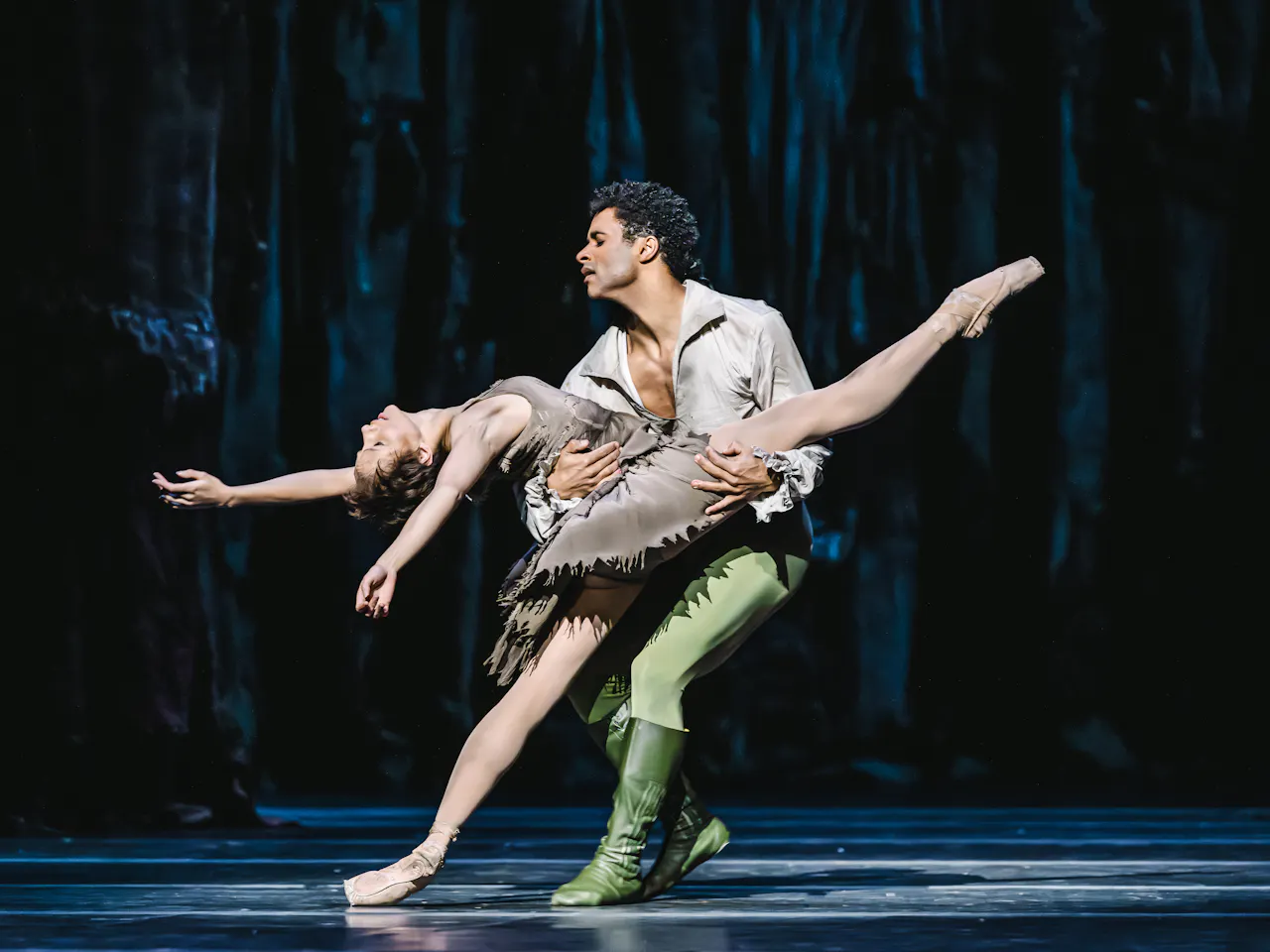
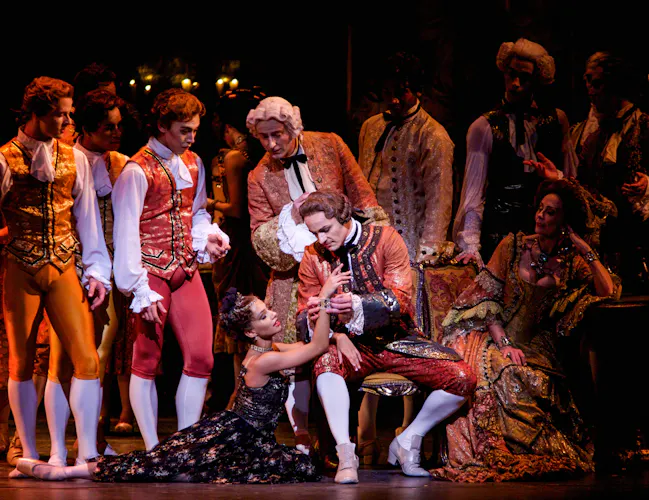
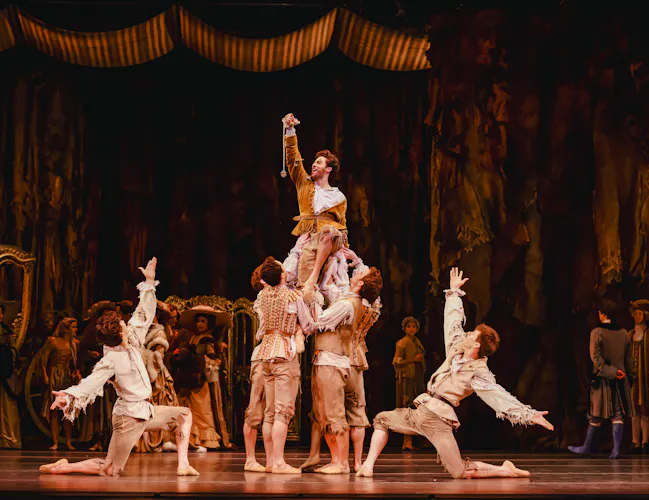
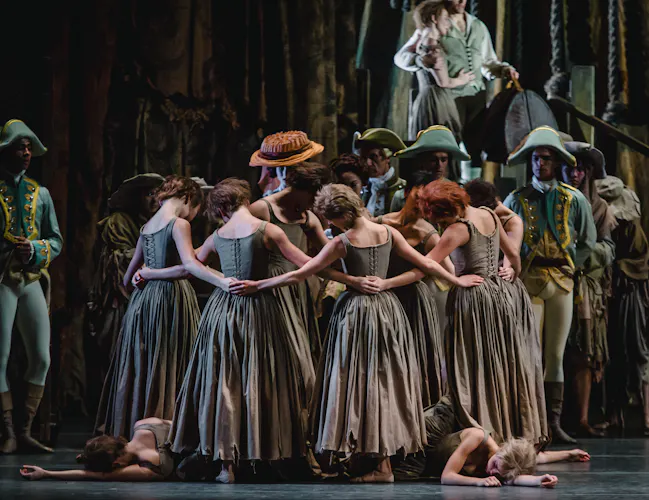
In the seedy underbelly of 18th-century Paris, money is king. Nothing is sacred – even love itself can be bought for the right price. A native of this hedonistic underworld, Manon is caught between twin desires when she falls in love with the student Des Grieux. Steadfast and devoted, he offers the possibility of an honourable life – but the riches promised by the world of Parisian society remain tempting...
Read full synopsis
Creatives
The artists and creatives behind the production
Company
Choreography
Music
Orchestrated by
Orchestration
Designers
Lighting designers
Discover
From book to stage
The inspiration
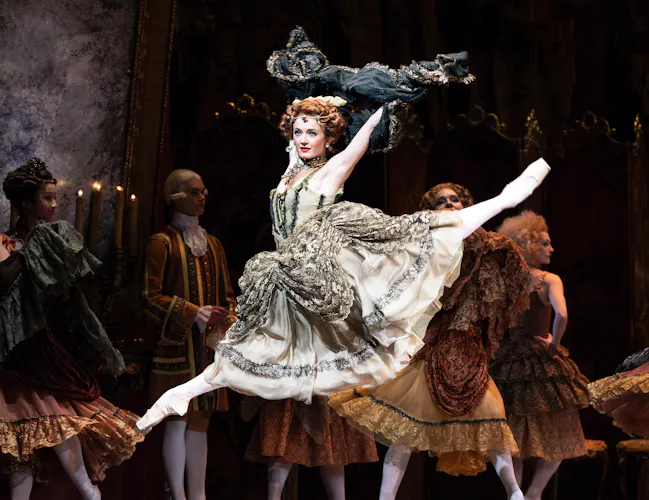
In this signature work of The Royal Ballet, Kenneth MacMillan’s nuanced understanding of human psychology makes for an unflinching look into the moral degradation of Manon’s Paris, while all its decadence and decay are brought to life through Nicholas Georgiadis’s designs.
The ballet Manon is an adaptation of Abbé Prévost’s 1731 novel, L’Histoire du Chevalier des Grieux et de Manon Lescaut. At the time of its initial publication, the story formed part of Prévost’s serial novel, Memories and Adventures of a Man of Quality. Its controversial depiction of the Parisian lowlifes who inhabit the demi-monde caused the book to be seized for being morally questionable. Prévost eventually released the novel as a revised standalone book. The complex character of Manon has invited contrasting interpretations over time; she has been derided as a corrupting female force and pitied as a victim of her circumstances. It is unsurprising then, that Prévost’s tale has inspired multiple adaptations on the stage, include Daniel Auber’s 1856 opera Manon Lescaut, Jules Massenet’s 1884 opera Manon and Giacomo Puccini’s 1893 Manon Lescaut, in addition to Kenneth MacMillan’s 1974 adaptation for The Royal Ballet.
A heritage signature
The history
Kenneth MacMillan’s Manon premiered on 7 March 1974 and was MacMillan’s second three-act ballet as artistic director of the Company. He had chosen Antoinette Sibley and Anthony Dowell to perform the roles of the protagonists, leaving a copy of Prévost’s novel for the both them to read as preparation. Dancer Jennifer Penney was also instrumental to the creation of Manon, as MacMillan created parts of Manon’s role on her when Sibley was out of action due to injury. With the help of British composer Leighton Lucas and pianist Hilda Gaunt, MacMillan used an arrangement of Massenet works (rather than Massenet’s own opera Manon) as the musical basis for his ballet.
The characters of Manon – and the tale of survival and tragedy that surrounds them – remain a compelling interpretative opportunity for the Company today.
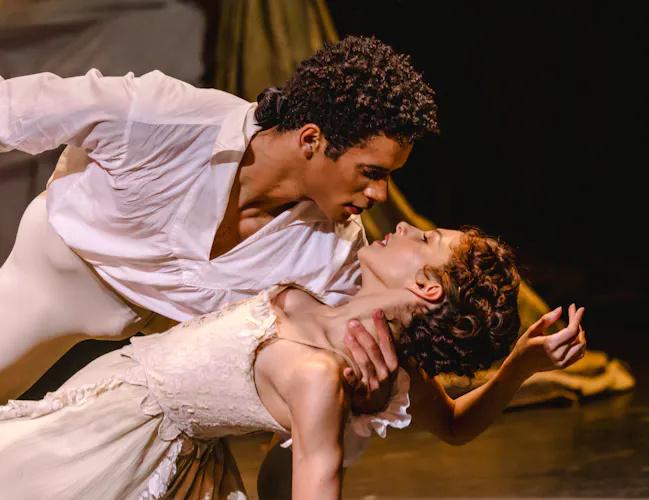
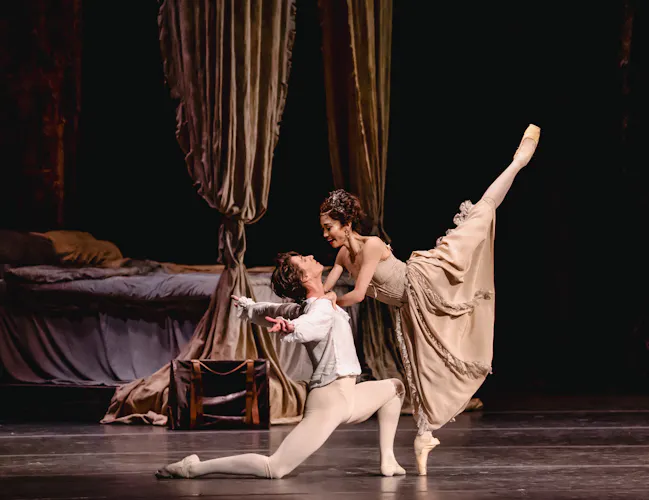
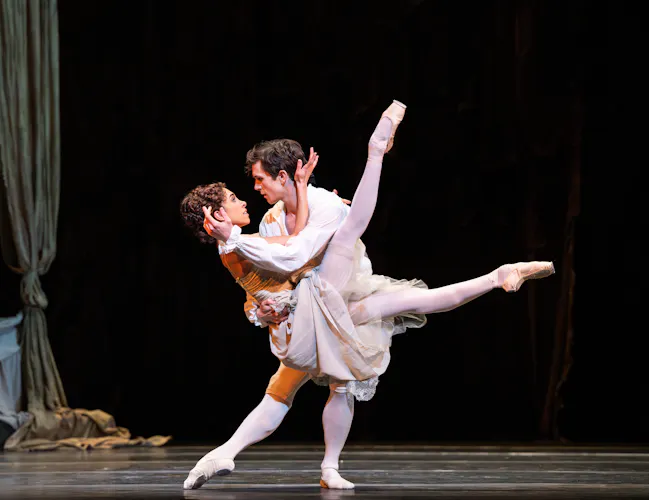
Dance Highlight: Act I, 'Bedroom' pas de deux
Gallery
Accessibility and resources
There is lift access and there are step-free routes to over 100 seats in the Stalls Circle, Balcony and Amphitheatre. Some seats in the Stalls Circle, Balcony, Amphitheatre and the Donald Gordon Grand Tier are accessed by 9 steps or fewer. There are 10 steps or more to access seats in the Orchestra Stalls.
You can use the assistive listening systems in our auditoriums. Surtitles, captions and translations in English are displayed on screens above the stage and around the auditorium.
Join our Access Scheme for priority access to tickets and to inform us of your access requirements.
See our Accessibility page for more information or view a visitors guide (PDF, 12.0 MB).
Be the first to know
Sign up to hear the latest Royal Ballet and Opera news, receive ticket alerts, and discover how to support us.