Cinderella
Our quick guide to this fairy tale, ballet classic.
This enchanting ballet by The Royal Ballet’s Founder Choreographer Frederick Ashton is a theatrical experience for all the family this Christmas.
Quick Facts
Who wrote Cinderella?
Cinderella is a folk tale told throughout the world. The first literary version was published in Italy in 1634, but the version still used to today was published in French by Charles Perrault in 1697. It is also associated with the Grimm Brothers – the story of Aschenputtel was published in their collection of Grimms' Fairy Tales in 1812.
What is the story of Cinderella?
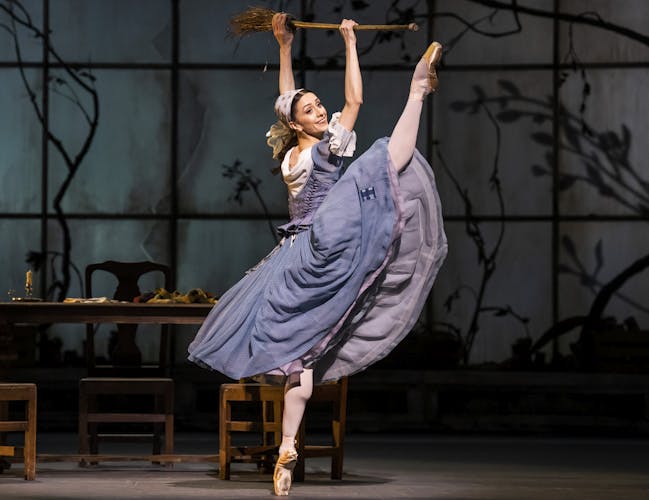
Stuck at home and put to work by her spoiled Step-Sisters, Cinderella’s life is dreary and dull. Everything changes when she helps a mysterious woman out...
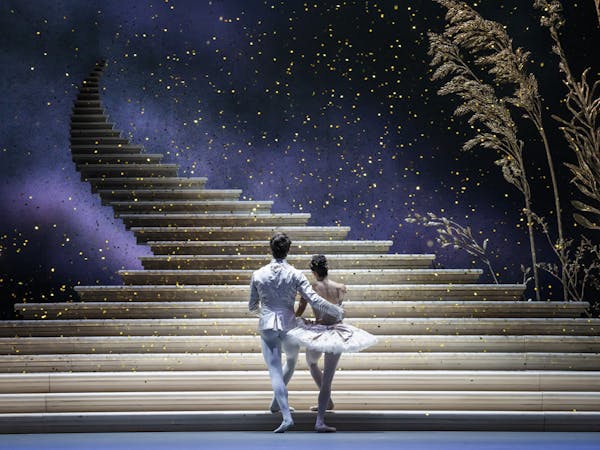
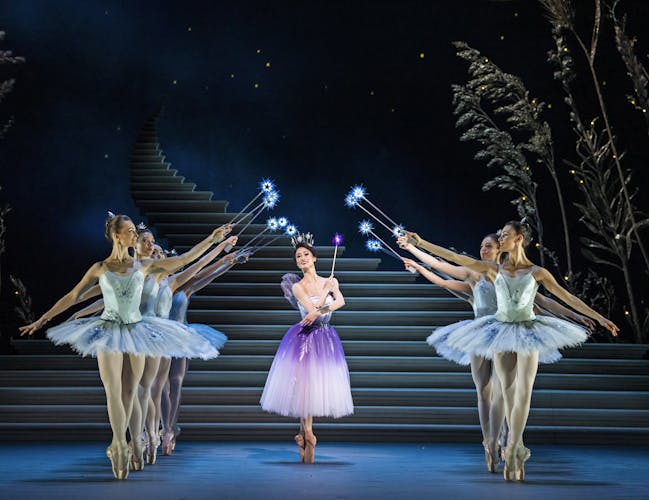
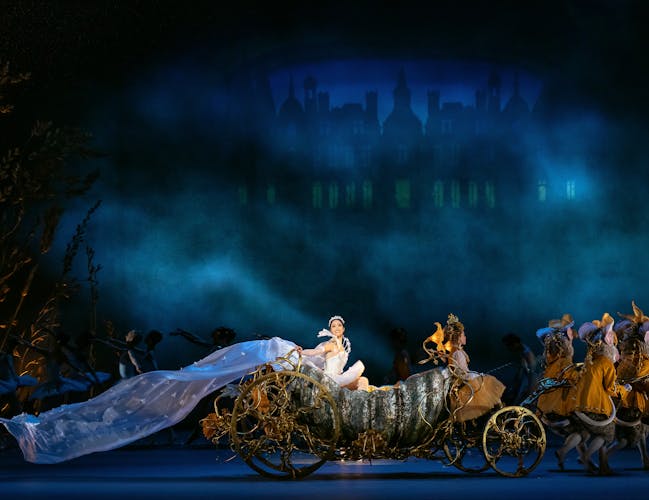
With a little bit of magic, she is transported into an ethereal new world – one where fairies bring the gifts of the seasons, where pumpkins turn into carriages, and where true love awaits.
Who composed the music for the ballet of Cinderella?
Cinderella was written by Sergei Prokofiev in the early 1940s. He was commissioned to create the work after the success of Romeo and Juliet, which he had written for the Kirov Ballet.
Who choreographed the ballet of Cinderella?
The Royal Ballet's production of Cinderella is choreographed by Frederick Ashton. He began work on choreographing Cinderella when The Royal Ballet moved to Covent Garden in 1946, after the end of World War II. The work had its premiere on 23 December 1948.
Who designed the costumes and scenery for Cinderella?
The designer for Frederick Ashton's original production was Jean-Denis Malclès. In 2023, whilst the choreography remained the same, new designs were created for The Royal Ballet's production. The scenery was designed by Tom Pye and the costumes by Alexandra Byrne.
How long is Cinderella?
The performance lasts approximately 2 hours and 45 minutes, including two intervals.
To find exclusive souvenirs and gifts inspired by Ashton's ballet: explore the Cinderella collection at the Royal Ballet and Opera Shop.
History
A tale through history
From Disney to pantomimes, the tale of Cinderella has become a family favourite around the world. The story we know today is attributed the 17th century and to Charles Perrault, a French writer of folk tales. However, the character of Cinderella herself can be found in tales much further back in history. The earliest recording of this type of folk tale is found in Ancient Greece. In the first century, geographer and writer Strabo wrote a story of a enslaved girl named Rhodopis. A eagle steals one of her sandals and places it in the hands of an Egyptian King, who is so enraptured by the shapely sandal that he orders his soldiers to search the entire kingdom for the owner.
In 1634 the story resurfaces in a compilation of tales by Giambasta Basile, where the heroine Zezolla is forced into slavery by her evil stepmother. Again in 1697 Charles Perrault writes the story, this time with the addition of a fairy godmother and a transforming pumpkin. The Brothers Grimm published their version of the fairy tale in 1812. Without the fairy godmother, Cinderella (or in their version, Aschenputtel) is helped by a magical tree and a flock of doves. In 1819, they published a second, much darker version, in which the Step-Sisters chop of their toes in order to fit into the famous slipper.
A Royal Ballet classic
In 1939, after a successful revival of The Sleeping Beauty, Frederick Ashton (the Principal Choreographer of the then Vic-Wells Ballet) proposed to begin work on a new full-length ballet for the fairy tale story of Cinderella. This was to be the first British-made version of the Russian original, choreographed for the Kirov Ballet by Marius Petipa, Enrico Cecchetti, and Lev Ivanov for the Kirov Ballet in 1940. However, due to the outbreak of World War II, Ashton had to put his dreams on hold. The Royal Ballet (as it became known) moved from its home at the Sadler's Wells theatre to Covent Garden at the end of the war in 1945. From here Ashton could revive his ideas of bringing this fairy tale to life in the British style. The work had its premiere on 23 December 1948.
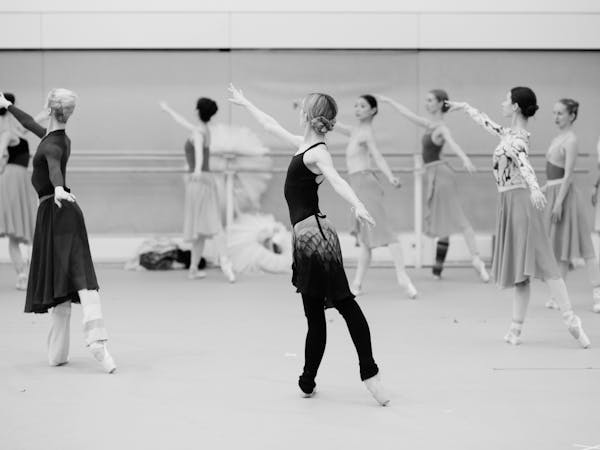
Ashton left Cinderella to its first Prince – Michael Somes – has been part of The Royal Ballet repertory ever since. In 2023, ten years after it was last performed at Covent Garden, the production was brought back to life by Wendy Ellis Somes, the wife of Michael Somes, who herself danced the role of Fairy Autumn among others from the production.
Cinderella Synopsis
Characters
- Cinderella – A young woman who lives with her father and Step-Sisters. She is treated badly by her Step-Sisters and wishes for a better life.
- Cinderella's Father – A gentle man who loves his daughter but is afraid of his bad tempered step-daughter.
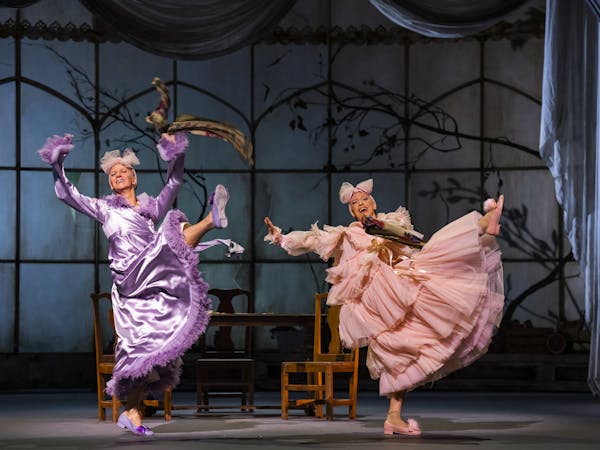
- The Step-Sisters – Comic characters, played by both men and women, they are unkind to Cinderella and are obsessed with status.
- The Fairy Godmother – Appearing first in disguise, she helps Cinderella get to the ball.
- Fairies of the Four Seasons – The Fairy Godmother calls upon The Fairy Spring, The Fairy Summer, The Fairy Autumn and The Fairy Winter to help prepare Cinderella for the ball.
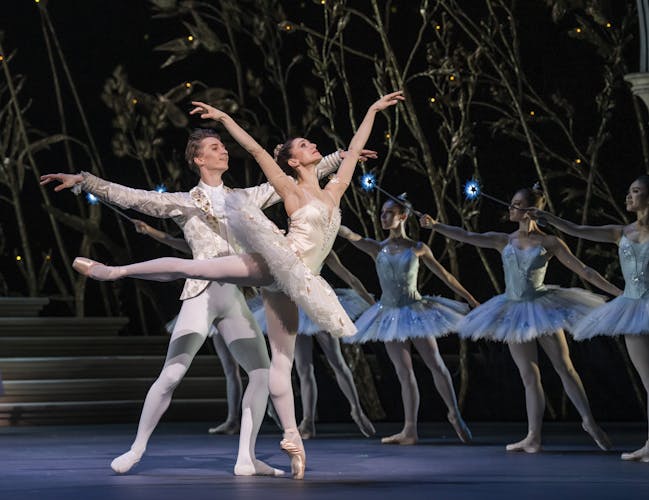
- The Prince – He hosts a ball at his palace where he meets and falls in love with Cinderella.
ACT I: A room in the house of Cinderella’s father
ACT II: The palace
ACT III: After the ball
Pictures and Videos
Gallery
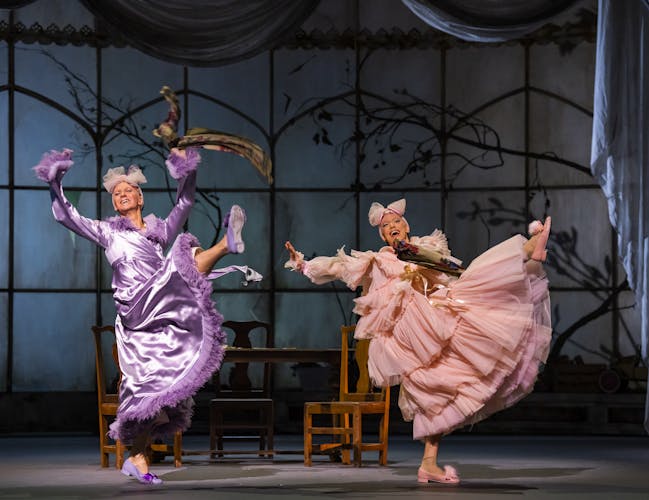
The Step-Sisters
The theme of a pantomime dame or comedy character can be found across Ashton's choreography; Bottom provides comedy in The Dream (1962), as does Widow Simone in La Fille mal gardée (1960). The Step-Sisters in Cinderella are no exception. They tow the line between the ethereal classicism of the fairies and the tounge-in-cheek comedy often associated with British narrative ballet.
The original roles were danced by Ashton himself, alongside Robert Helpmann, although only after the first-choice dancers took other engagements. The Step-Sister roles were originally choreographed for women and have been danced by both men and women ever since. In the 2023 production, the decision was made to return to the intended casting – but with a nod to Ashton – as both men and women were cast as Cinderella's Step-Sisters.
Prokofiev's music gives the dancers plenty to aid the characterisation of the haughty pair. Sharp, accented strings give the effect of bickering with wayward woodwind providing ironic renditions of classical dance styles, such as the gavotte.
Watch more
Watch on Royal Ballet and Opera Stream
You can watch the production as well as behind-the-scenes insights, interviews and introductions on Royal Ballet and Opera Stream.