The Rite of Spring + Duke Bluebeard’s Castle in Concert
Opera and music
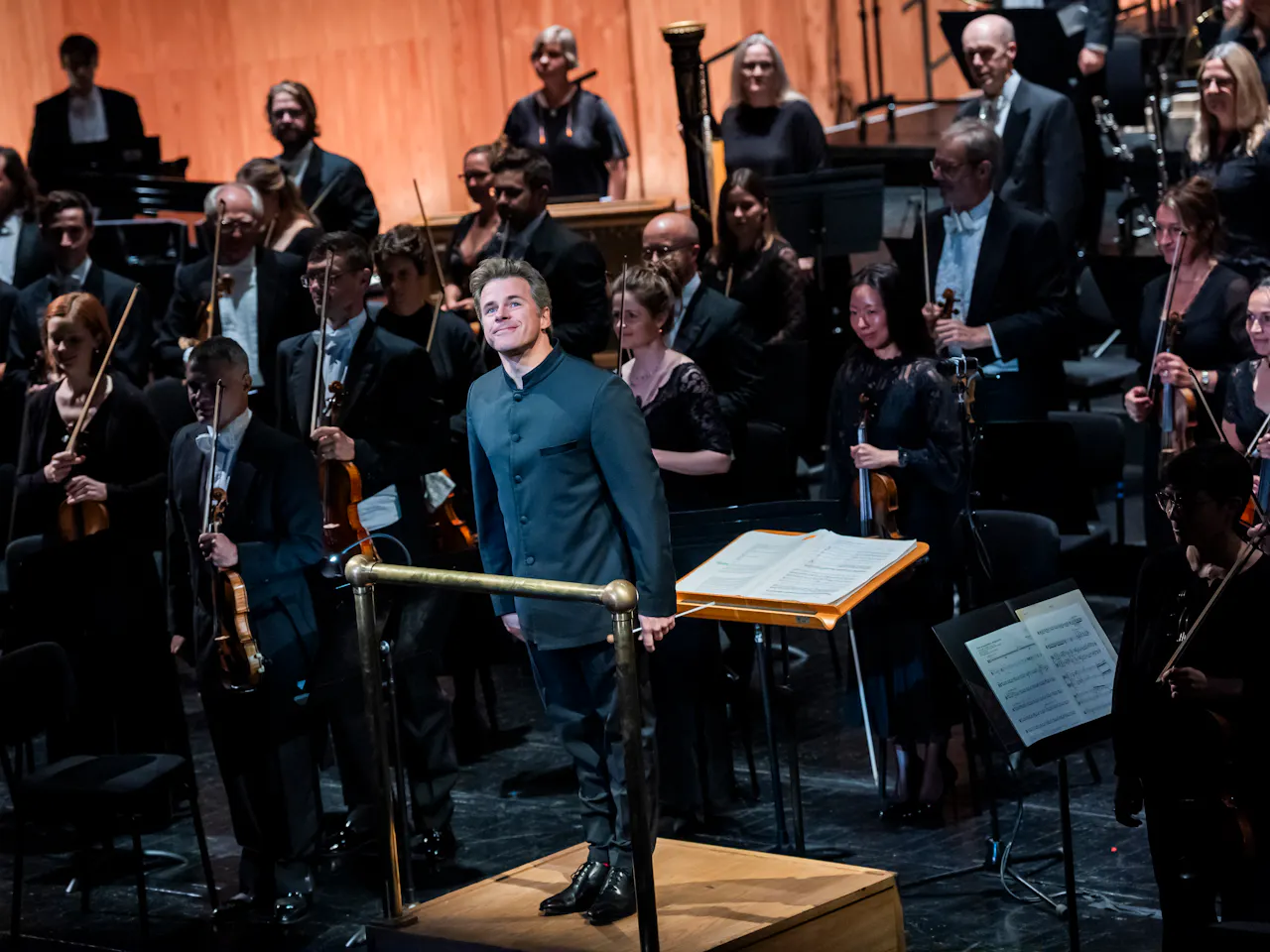
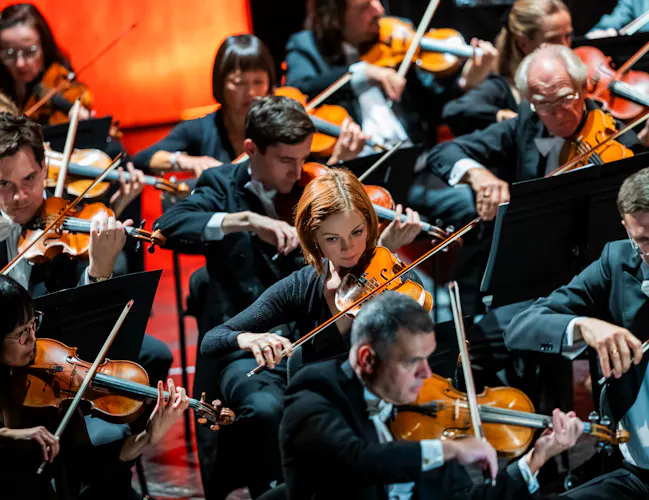
For one night only, Music Director of The Royal Opera Jakub Hrůša and the Orchestra of the Royal Opera House present a concert of Stravinsky's scandalous The Rite of Spring and Bartók's blood-red thriller Duke Bluebeard’s Castle, starring Elīna Garanča and Christian Van Horn.
Not yet on sale
General booking opens on 21 October 2026
Priority booking dates
Dates
Location
Approximate timings
The performance will last approximately 2 hours, including one interval.
The Rite of Spring:
35 minutes
Interval:
25 minutes
Duke Bluebeard's Castle:
1 hour
Expand all dates
Friday 2 April, 8.00pm
Guidance
Content suitable for all
Children under the age of five are not permitted into our theatres. Children over the age of five must have their own ticket and sit next to an accompanying adult.
Language
Duke Bluebeard's Castle is sung in Hungarian with English surtitles, which are displayed on screens above the stage and around the auditorium.
Generous support from
Exceptional philanthropic support from
Royal Ballet and Opera Principal The Julia Rausing Trust
Generous philanthropic support from
The Maestro Circle
Programme
For one night only, Music Director of The Royal Opera Jakub Hrůša and the Orchestra of the Royal Opera House present a concert of Stravinsky’s scandalous The Rite of Spring and Bartók’s blood-red thriller Duke Bluebeard’s Castle, starring Elīna Garanča and Christian Van Horn.
Duke Bluebeard’s Castle and The Rite of Spring in Concert includes
Discover
In The Rite of Spring, a sacrificial virgin dances herself to death against the infernal – and often violent – rhythms of Stravinsky’s percussive and propulsive score. In Duke Bluebeard’s Castle, a woman’s curiosity about her new husband leads to a sinister discovery. Giving life to the dark textures and impressionistic colouring of these Slavic masterpieces is the Orchestra of the Royal Opera House, which conjures a vivid aural imagery that is distinctly modern, and impossible to forget.
The Rite of Spring
’I had dreamed of a scene of pagan ritual in which a chosen sacrificial virgin danced herself to death.’ So said Igor Stravinsky, in his book Conversations, when recalling the inspiration behind his now infamous Rite of Spring. Depicting the return of spring and the renewal of the earth, the work, a ballet and an instrumental concert piece, was completed by Stravinsky on 29 March 1913, and had its premiere – as a ballet – at Paris’s Théâtre des Champs-Élysées two months later. The scandal Rite caused was undeniable, the first-night response likened to a riot. Stravinsky’s score, wild and raw, paired with dancer Vaslav Nijinsky’s avant-garde choreography, marked, for many, the advent of modernist music, Rite not only ushering in a new, contemporary musical language, but confirming Stravinsky’s spot as one of the 20th century’s greatest composers.
Duke Bluebeard’s Castle
’Are you frightened?’ Newlywed Judith leaves her family and returns to her husband Bluebeard’s castle. Though he instructs her not to open the doors to his castle, she is insistent. The only opera by Béla Bartók, Duke Bluebeard’s Castle, written in 1911, remains a defining work of the 20th century, and of Hungarian musical history. The tale of Bluebeard dates back as early as 1697, the character found in La Barbe bleue, a story in Charles Perrault’s collection Histoires et contes du temps passé avec des moralités. Belgian playwright Maurice Maeterlinck’s drama Ariane et Barbe-Bleue (1901) – later adapted into an opera by Paul Dukas – iterates on the tale. But it was Bartók’s work that brought the eerie psychological drama to the public eye. Like fellow Slavic composer Leoš Janáček, Bartók allows the text – by Béla Balázs – to define the music of Bluebeard, flexible rhythms of speech paired with the sounds of traditional Hungarian folk music, collected and studied meticulously by the composer, imbuing the work with its unmistakable cultural identity.
Gallery
Accessibility and resources
There is lift access and there are step-free routes to over 100 seats in the Stalls Circle, Balcony and Amphitheatre. Some seats in the Stalls Circle, Balcony, Amphitheatre and the Donald Gordon Grand Tier are accessed by 9 steps or fewer. There are 10 steps or more to access seats in the Orchestra Stalls.
You can use the assistive listening systems in our auditoriums. Surtitles, captions and translations in English are displayed on screens above the stage and around the auditorium.
Join our Access Scheme for priority access to tickets and to inform us of your access requirements.
See our Accessibility page for more information or view a visitors guide (PDF, 12.0 MB).
Be the first to know
Sign up to hear the latest Royal Ballet and Opera news, receive ticket alerts, and discover how to support us.