Sensory Guide for 4.48 Psychosis
Sensory Guides provide time-stamped information on a production's sensory elements and content warnings as well as signposting for resources and support.
Information
About Sensory Guides
Sensory Guides provide information about sensory elements of a live performance and the times at which they occur.
This can include unexpected loud noises, the use of haze, flashing lights or strobe lighting. They also provide information about triggering content, such as the use of guns, any kind of sexual content, or an actor performing emotional distress.
These can help support you with your enjoyment and understanding of a production and may be helpful to those who experience the challenges of mental health and have trauma that could be triggered by a production.
This Sensory Guide contain details of the story, so if you do not want to know this information, please do not continue to read.
Resources
For the topics covered in 4.48 Psychosis
If you have been affected by the themes and content of 4.48 Psychosis, the following resources might be helpful.
Samaritans
The Samaritans provide free, confidential emotional support for anyone experiencing emotional distress or at risk of suicide.
- Visit the website of Samaritans
- Phone – 116 123
- Text the word SHOUT to 85258
C.A.L.L (Wales only)
Provides emotional support, resources and information on mental health for those living in Wales.
- Visit the website of C.A.L.L
- Phone – 0800 132 737
Mind
Provides information, advice and advocacy for a variety of mental health issues and challenges.
- Visit the website of Mind
- Phone – 0300 123 3392 for mental health information
Survivors of Bereavement by Suicide
Provides information and support to individuals impacted by the suicide of someone close to them.
- Visit the website of Survivors of Bereavement by Suicide
- Phone – 0300 111 5065
Beat Eating Disorders
Provides information and support for individuals experiencing the challenges of eating disorders.
Lifesigns
Provides information and support for individuals who self-harm.
Living with Schizophrenia
Provides information and first-hand accounts of individuals living with schizophrenia in the UK.
Content
This production includes themes of depression, psychosis, schizophrenia, eating disorders and borderline personality disorder. There are depictions of violence, self-harm, suicide and death. There are instances of strong language as well as flashing lights and loud noises. The stage is set as a clinical room in a psychiatric unit. The orchestra perform from a platform raised above the room on stage.
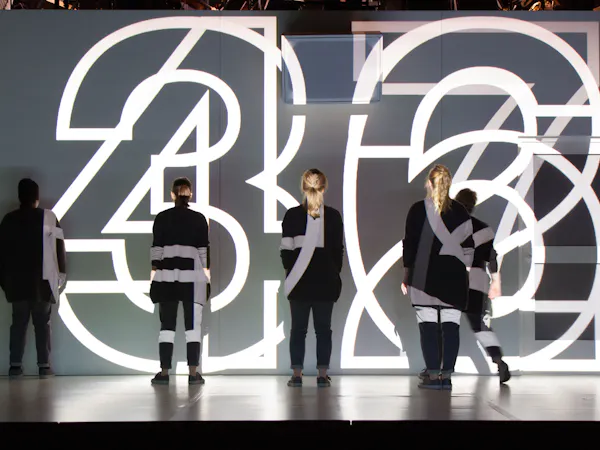
This production is sung in English with English surtitles, which are displayed on screens above the stage and around the auditorium. There are words and sentences also displayed on the stage around the set.
While surtitles are displayed on a screen above the stage, words and phrases will be projected brightly onto areas of the set as part of the set design.
Synopsis
4.48 Psychosis is an opera by Philip Venables, directed by Ted Huffman and based on a play of the same name by Sarah Kane. The work explores the ways in which a person's thoughts and feelings can unravel when living with clinical depression, with its title referring to the period of time, 4.48am, that Kane would often wake and experience lucidity. In the opera, this struggle with mental health is interpreted through singing, spoken word, acting and stage-effects, such as flashing lights.
This Sensory Guide contain details of the story, so if you do not want to know this information, please do not continue to read.
Characters
There are no specific characters in 4.48 Psychosis. Each performer is exploring different thoughts and the chaotic way they can manifest through singing and speaking.
The performance
This performance lasts approximately 1 hour and 30 minutes, with no interval.
Audio Description is available.
Timing | Sensory Content |
|---|---|
From the beginning | Sound: Soft instrumental music plays. A drum is repetitively hit throughout. The soft instrumental music sounds like the music you might hear while being asked to hold on a phone-line. Action: The performer leans against the chair and wall as though in distress. |
At approximately 1-2 minutes | Sound: The off-stage orchestra play alongside the onstage musicians, with music that is building in intensity and loudness. It abruptly stops. Action: The performer seems to be struggling to breathe. The music and orchestra stop, and the performer is heavily breathing as though they are having a panic attack. |
At approximately 3 minutes | Action: Many performers come into the room on stage from different doors. |
At approximately 5 minutes | Content: The performers sing and speak about different negative feelings they have towards themselves and others. One performer says 'I would like to kill myself'. Some performers talk about death and mortality. |
At approximately 6 minutes | Content: A performer discusses hanging themselves. They also discuss the negative associations that society has towards people experiencing the challenges of mental health. |
At approximately 7 minutes | Sound: The music suddenly shifts in tempo, pitch and volume. It suddenly picks up to a frantic melody Lighting: Large, quick-moving numbers are projected onto the stage. This creates a flashing sensation. |
At approximately 8 minutes | Sound: There are intermittent buzzing sounds throughout. Action: A performer collapses on the floor and is held up by the others. |
At approximately 8 minutes | Sound and Action: A performer screams. |
At approximately 9 minutes | Sound and Action: Music quietens as all performers pick themselves from the floor. |
At approximately 10 minutes | Action: The main performer begins to sing but another performer places their hand in front of their mouth from behind, muffling their singing. |
At approximately 11 minutes | Sound: The music becomes frantic and fast. |
At approximately 11-13 minutes | Content: Extremely strong language is used throughout. |
At approximately 14 minutes | Sound: The music fades and is replaced by the instrumental hold-music. A drum and tinny sounding percussion is used as phrases flash brightly on the walls of the room on the stage. Content: These phrases are describing different methods of self-harm and suicide and form an unspoken conversation happening between two performers where one describes their methods of self-harm and the other raises concerns, advice or judgements. This conversation format is used throughout. |
At approximately 17 minutes | Sound: Frantic and loud music rises and falls, replaced with eerie sounding melody. |
At approximately 20 minutes | Sound: Music becomes loud and jarring with sharp tones. |
At approximately 21 minutes | Lighting: Brightly lit letters flash across stage. Action: All performers are pulling at the main performer from one side of the stage and they struggle. A performer screams and knocks over a chair. |
At approximately 23 minutes for around 3 minutes | Sound: Loud white noise sounds are heard intermittently. These lasts for approximately 6 seconds, followed by a bright flash. This is repeated at 23 minutes 28 seconds in, 24 minutes 14 seconds in, 24 minutes 45 seconds in and 25 minutes 38 seconds in. |
At approximately 26 minutes | Sound: Fairground music begins to play. Content: All performers use extremely strong language as they swear at each other, call each other names and start fighting. One performer hits another around the face. This is part of the performance, has been rehearsed safely and no performers have been harmed. Sound: On-hold music returns. |
At approximately 28 minutes | Content: Phrases and sentences about self-harm by cutting are projected on the wall and around the room on stage. There are also references to society’s negative perception of mental health challenges. |
At approximately 34 minutes | Sound: The tempo of the music changes dramatically with droning orchestral sounds layered over the aria being sung. |
At approximately 35 minutes | Sound: The on-hold music returns, relatively quietly. A member of the orchestra uses a saw to make a harsh percussion sound intermittently. This is followed by a drum being beat several times. Content: The phrases about self-harm, challenges of clinical mental health and suicide continue to be projected around the rooms walls in conversation with one another. |
At approximately 37 minutes | Sound: A loud whistle is blown which continues for approximately 15 seconds. This is followed by the drum and saw being played at the same time. |
At approximately 40-42 minutes | Action: All performers fight on stage – one puts their hands around anothers throat. Lighting: A light flashes and all lights in the room go off apart from the lit doorway. Action: All performers fall to the ground, with laboured breathing. Sound: They all take a big, loud breath of air in at the same time as a drum is hit. This is followed by drone-sounding music. |
At approximately 43 minutes | Content: There is spoken word about symptoms of clinical mental health, medications, side effects, self-harm, psychosis, paranoia, suicidal ideation, overdose and attempts at suicide. This is also projected onto the wall. |
At approximately 50 minutes | Action: The performers start to wrestle and fight one another again. One performs a strangling action on the other. They fall to the floor gasping for breath. They wrestle to the floor, with the performer who is being strangled appearing to fight back. This is part of the performance, has been rehearsed safely and no performers have been harmed. They roll away, gasping for breath and then embrace in a tender hug. Sound: The music is loud and jarring. |
At approximately 52 minutes | Content: A series of statements referring to historic atrocities, including the Holocaust and the Cambodian Genocide, are shouted out and projected onto the wall. A statements referring to child sexual abuse is also shouted out and projected onto the wall. This moment in the production reflects on the characters clinical psychosis and delusions and how troubling they find these feelings and do not reflect the characters true beliefs or actions. |
At approximately 1 hour | Content: There is spoken word discussing the anguish the character feels at 4.48am each morning when they wake and experience the lucidity. |
At approximately 1 hour 2 minutes for 3 minutes | Sound: The performer screams and shouts as the orchestra bangs their instruments. The music becomes extremely noisy and layered with different sounds which are played intermittently for approximately 3 minutes. |
At approximately 1 hour 6 minutes | Lighting: Large, brightly-lit numbers are projected onto the stage. The numbers change randomly, counting down. Sound: The music is loud and frantic. |
At approximately 1 hour 15 minutes | Content: One of the performers refers to taking care of people with clinical depression as not "sane” and how they need a break from their work, referring to both the emotional nature of the work of psychiatrists, doctors and nurses as well as society's views about people who experience the challenges of mental health. This is sung and projected on the wall. |
At approximately 1 hour 22 minutes | Content: There is spoken word about suicide and some of the methods a person could use to die by or attempt to die by suicide, including drug overdose, cutting wrists and hanging. |
At approximately 1 hour 30 minutes | Lighting: A full blackout of the stage marks the end of the performance. Action: The performers will return to the stage to bow for audience applause. The orchestra will stand on the raise platform above the room on stage for applause. |
Information about the stage and spaces
There will be a quiet space in the Taylor Learning Room 2, which is located in the Linbury Foyer. There is step-free access down to the Linbury Foyer and the room will be signposted. Here, you can take a moment, relax and sit in the quiet if it becomes too overwhelming in the theatre or building.
The Linbury Theatre will remain open for a further 10 minutes after the performance to give audiences time to decompress and leave at their own pace.
Contact boxoffice@roh.org.uk for further information about accessibility and for further questions regarding this production.
Access Scheme
When you join our Access Scheme, you can customise your account with your specific access requirements.
You can tailor the booking process to include:
- Different kinds of accessible seating
- Personalised Accessible Performance and event information, dates and prices
- Discounted tickets for scheduled Accessible Performances, including Relaxed Performances
- A complimentary companion ticket for those who require personal assistance
- Access to resources such as Audio Described magazines, Audio Described introductions, Visual Stories, Sensory Guides, British Sign Language-interpreted synopsis videos and large print Season Guides
- Information on how to access assistive hearing devices and Audio Description equipment