Balanchine: Three Signature Works
Balanchine: Three Signature Works
Balanchine: Three Signature Works
Sensuous and shimmering beauty in three works by the man who defined American ballet.

With its extreme speed, dynamism and athleticism, Balanchine’s choreography pushed the boundaries of the art form.
With its extreme speed, dynamism and athleticism, Balanchine’s choreography pushed the boundaries of the art form.
Royal Ballet and Opera Principal Julia Rausing Trust

John Burns CBE and Susan Burns OBE, John McGinn and Cary Davis, Sir Lloyd and Lady Dorfman OBE, Simon and Meg Freakley, Kristina Kloberdanz, Royal Ballet and Opera Patrons and The American Friends of Covent Garden
Aud Jebsen

Background
When George Balanchine arrived on the shores of America, he changed the landscape of 20th-century ballet. With his company New York City Ballet, he created the American neoclassical style and reinvigorated the American ballet world. Many of his works are in the repertories of companies around the world. As part of the Dance Reflections by Van Cleef & Arpels Festival, The Royal Ballet brings three signature works of Balanchine’s to the Main Stage.
Serenade
Serenade was the first ballet Balanchine created in America. Set to Tchaikovsky’s soaring Serenade for Strings, the ethereal ballet was created on the students at the School of American Ballet, which he had newly founded. The choreography of Serenade reflects this – the real-life mistakes made by the students ended up in his finished ballet. It premiered in 1935.
Prodigal Son
Prodigal Son is an avant-garde ballet of sin and redemption, and was Balanchine’s last creation on Sergei Diaghilev’s famed ballet company, the Ballets Russes. Inspired by the biblical parable, it recounts the story of a rebellious son who returns home remorseful to his father after a dalliance with a beautiful but dangerous siren. The ballet premiered in 1929 with a commissioned score by Prokofiev.
Symphony in C
With its symmetrical formations and crystalline placements, Symphony in C brings this programme to a majestic and exhilarating close. Balanchine choreographed this grand classical work on the Paris Opera Ballet in 1947, finishing its creation in only two weeks and using a newly-discovered Bizet score which gives the ballet its name.
Visit the Dance Reflections Festival website for more information.
Cast and Creatives
SERENADE
Creatives
PRODIGAL SON
Creatives
SYMPHONY IN C
Creatives

Access
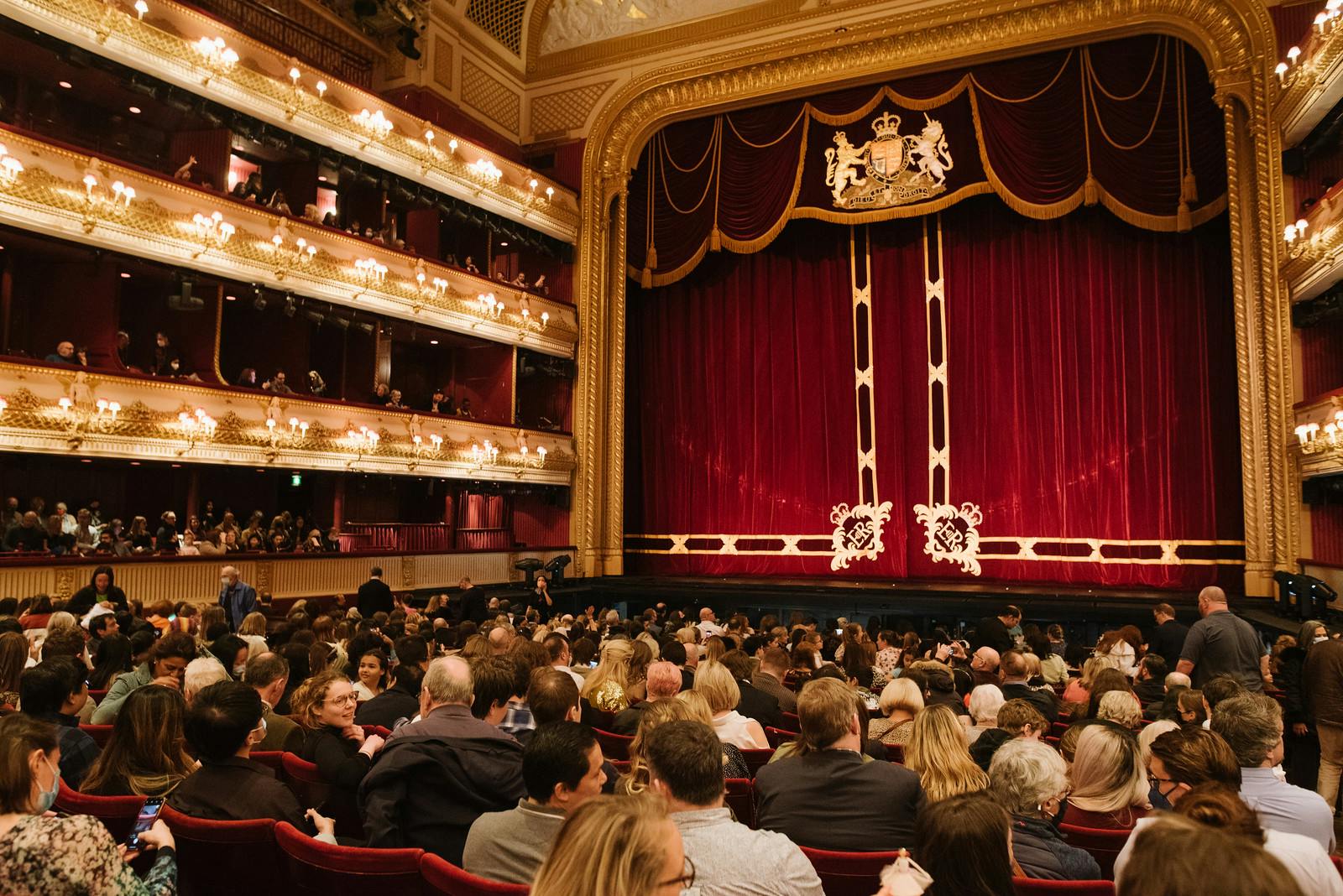
There is lift access and step-free routes to over 100 seats in the Stalls Circle, Balcony and Amphitheatre. There are 10 steps or fewer to some seats in the Stalls Circle, Balcony, Amphitheatre and the Donald Gordon Grand Tier. All seats in the Orchestra stalls are accessed by 9 steps or more. A handheld bell is rung by Front of House staff to signal guests to take their seats before a performance. The bell is loud and can be startling. The bell is rung approximately ten minutes before the show starts and at each interval.
We have an assistive listening system available to use.
Join our Access Scheme for priority access performance tickets and to personalise your account for your access requirements.
See our Accessibility page for more information on access at the Royal Opera House.
Donate
The Royal Ballet and Opera is a charity and relies on your support. No matter the size, every gift is critical to our work and helps us to secure the future of ballet and opera.
Your donation will enable us to keep extraordinary work on our stages, inspire the next generation and support the Royal Ballet and Opera's community of artists, technicians and craftspeople.
Culture, crafted by contribution
Be the first to know
Sign up to hear the latest Royal Ballet and Opera news, receive ticket alerts, and discover how to support us.
Sign up to hear the latest Royal Ballet and Opera news, receive ticket alerts, and discover how to support us.