Die Walküre
Die Walküre
Die Walküre
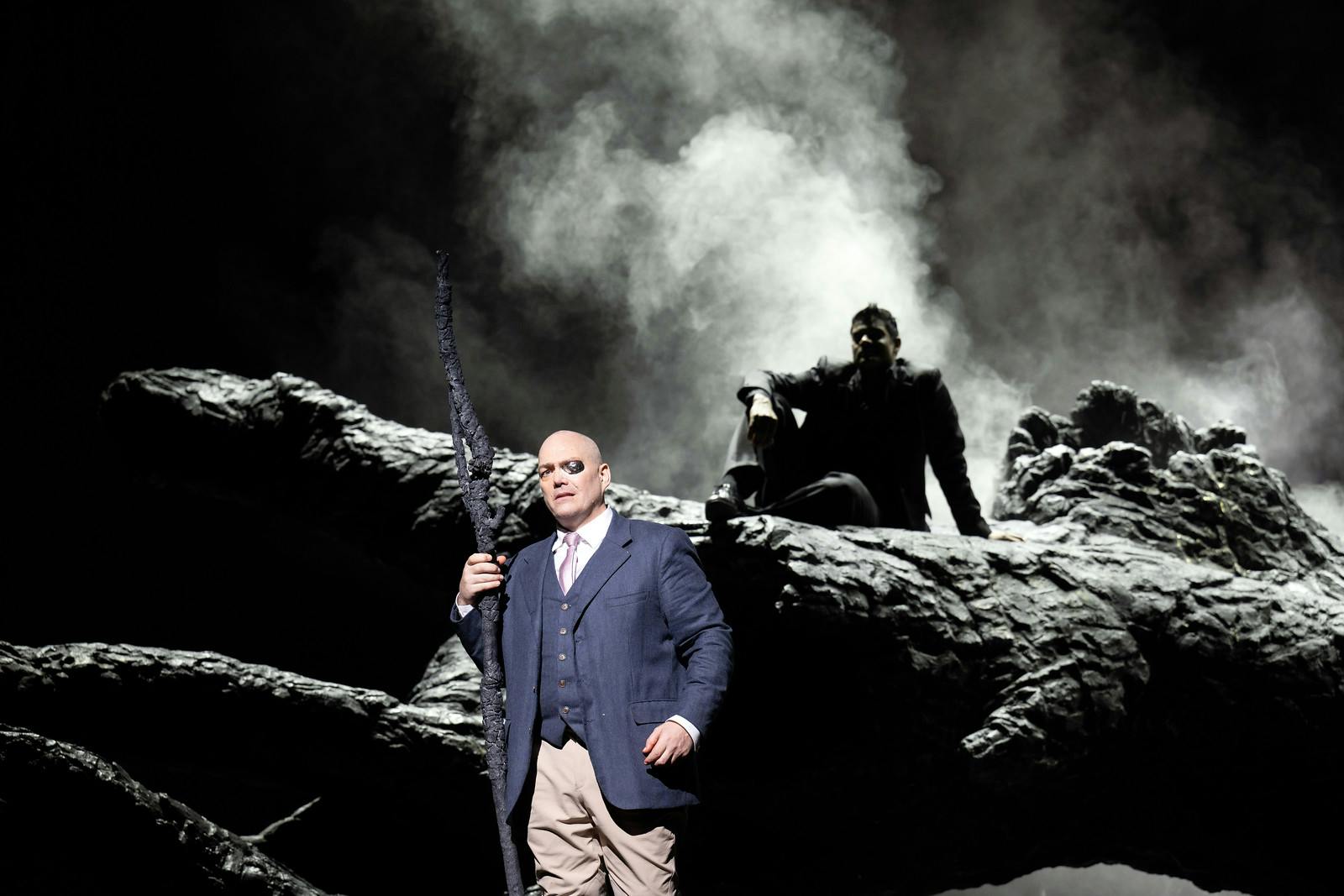
Gods and mortals battle in the second chapter of Wagner’s Ring cycle.

Director Barrie Kosky joins forces with Music Director of The Royal Opera Jakub Hrůša for the second chapter of Wagner's epic Ring cycle.
Director Barrie Kosky joins forces with Music Director of The Royal Opera Jakub Hrůša for the second chapter of Wagner's epic Ring cycle.
Ring Season Principals Alex and Elena Gerko and Royal Ballet and Opera Principal Julia Rausing Trust
Charles Holloway OBE
Pat & Dirk Bister, Ingemo and Karl Otto Bonnier, Philipp Freise, The Goldhammer Foundation, Malcolm Herring, Christopher and Sarah Smith, John G. Turner & Jerry G. Fischer and an anonymous donor
Aud Jebsen, Fondation Socindec, Mercedes T. Bass, Dr Michael Engel, Athena P S Ko, Simon and Virginia Robertson, John Sunderland and George Shishkovsky, The Thompson Family Charitable Trust, Die Walküre Production Syndicate, The Wagner Circle and The American Friends of Covent Garden
PREPARE FOR A WILD RIDE
On a stormy night, fate brings two strangers together, unleashing a love with the power to end worlds. Meanwhile, in the realm of the gods, an epic battle ensues between their ruler Wotan and his rebellious daughter, Brünnhilde.
To find out more about Die Walküre, including key plot points and background information: read our Ring cycle Opera Essentials page.
Background
Love and death, gods and mortals, heroes and villains: it’s all here, in the thunderous second chapter of the Ring cycle. Following the glittering triumph of Das Rheingold in 2023, Barrie Kosky and Antonio Pappano plunge back into Wagner’s mythic universe. Christopher Maltman’s Wotan returns alongside an international cast including Elisabet Strid as Brünnhilde, Natalya Romaniw as Sieglinde and Stanislas de Barbeyrac as Siegmund.
The Ring returns
Die Walküre (The Valkyrie) is the second work of Richard Wagner’s four-opera cycle Der Ring des Nibelungen; it follows Das Rheingold and precedes Siegfried and Götterdämmerung (Twilight of the Gods). It has become the most performed opera of the cycle, loved and admired for its nuanced and intelligent exploration of complex family entanglements, expressed through music of astonishing power – perhaps nowhere more so than in the glorious music for the incestuous lovers Siegmund and Sieglinde.
A lucky encounter with King Ludwig
Wagner’s fortunes improved dramatically when the young King Ludwig II ascended to the throne in Bavaria in 1864. Captivated by Wagner’s operas, the King employed him on a permanent basis, settling the composer’s debts, and installing him in a state of luxury at the Villa Tribschen on Lake Lucerne, where Wagner composed the famous Tristan und Isolde. Wagner subsequently founded the Bayreuth Festspielhaus: a theatre specially constructed for the demands of the Ring cycle, which hosts annual festivals of Wagner’s music to this day.
Totalling fifteen hours of music, Wagner’s Ring cycle is a colossal masterpiece composed over the course of 26 years, from 1848 to 1874. It consists of four epic operas which fuse ancient Norse mythology with German and Scandinavian folk tales to tell the story of an all-powerful ring, and its pursuit by the leader of the gods, Wotan. It is the culmination of Wagner’s ambition to create opera that unified text, music and drama in a Gesamtkunstwerk, or ‘total work of art’.
A complex musical landscape
Richard Wagner uses a compositional technique known as the ‘leitmotif’ (or recurring musical fragments) to weave a richly evocative musical tapestry in his Ring cycle operas. These musical ‘cells’ are often associated with different characters, or aspects of the story. In Die Walküre, some of the most famous motifs are the ‘Nothung’ sword melody (an ascending trumpet fanfare), or the yearning, twisting string melody that signifies the desire between the twins. As the opera progresses, these and other motifs return and develop in endless combinations, resulting in a complex musical landscape.
Ride of the Valkyries
The 'Ride of the Valkyries' is the best-known piece of music from the opera. The music, which opens Act III, is an astonishing evocation of flight, depicting the fantastical valkyries, harvesting fallen heroes from the field of battle. Over the sound of quivering woodwinds, a galloping melody vaults upwards, the trombones unleash their famous, dazzling tune and we are swept up with the mythical daughters of Valhalla, as they sing their glorious arrival: ‘Hojotoho!’. Despite the fame of this introduction as a stand-alone piece, in its full dramatic context within Wagner’s Ring cycle, it is merely the prelude to what many describe as the pivotal scene of the entire saga: Wotan’s heartbreaking farewell to his rebellious daughter, Brünnhilde.
Cast and Creatives
Creatives
Reviews
Wagner Appeal
Wagner’s Ring cycle is monumental in its scope and a defining artistic undertaking for any opera company. Not only are we currently staging a brand-new Ring cycle, but we continue to keep Wagner as core pillar in The Royal Opera's repertory.
We need your help to bring these epic stories and technical undertakings to our stage. Support for our Wagner appeal will ensure we can continue to meet the responsibility of performing these incredible works.
Culture, crafted by contribution
Be the first to know
Sign up to hear the latest Royal Ballet and Opera news, receive ticket alerts, and discover how to support us.
Sign up to hear the latest Royal Ballet and Opera news, receive ticket alerts, and discover how to support us.