Madama Butterfly
Opera and music
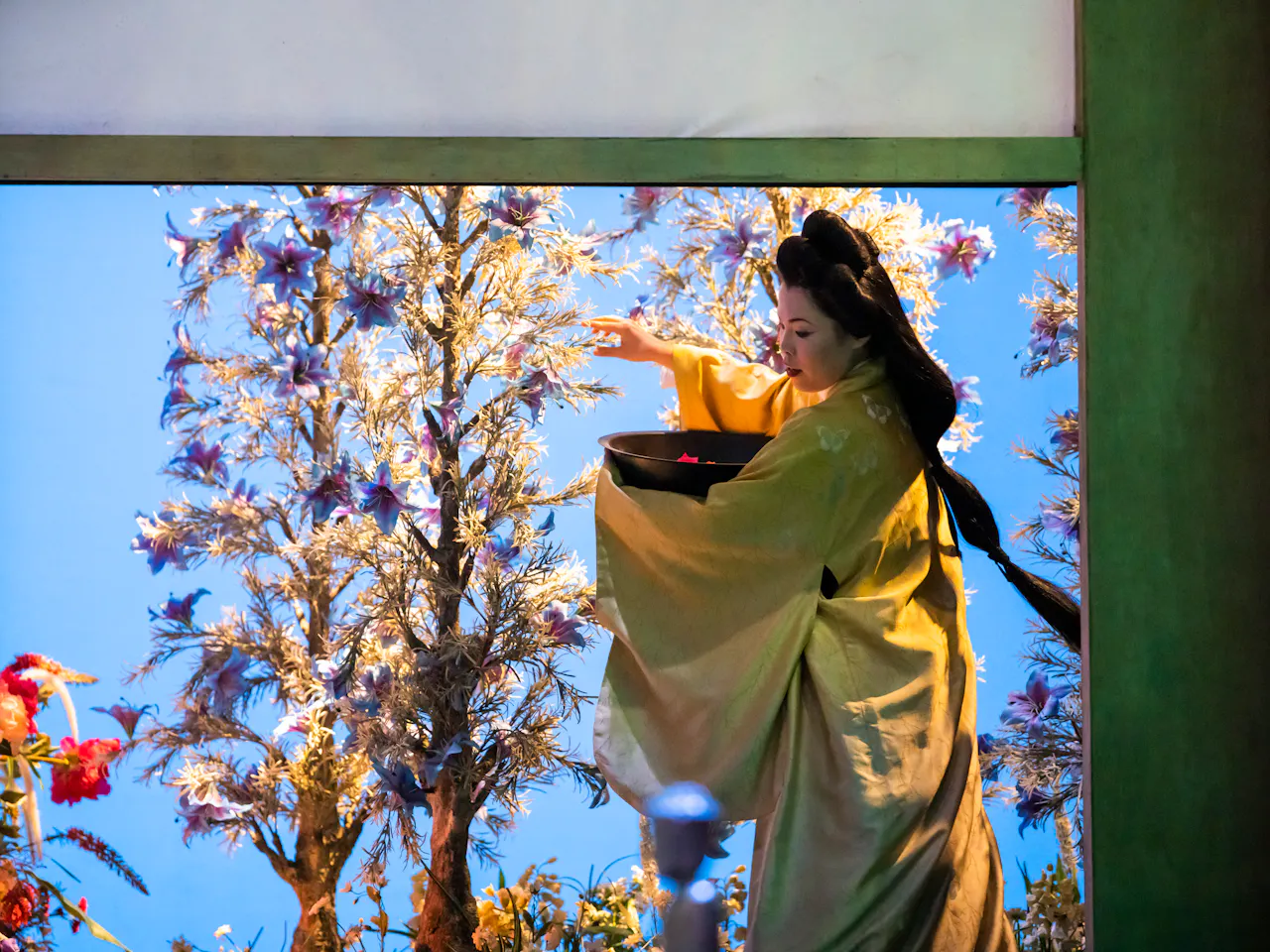
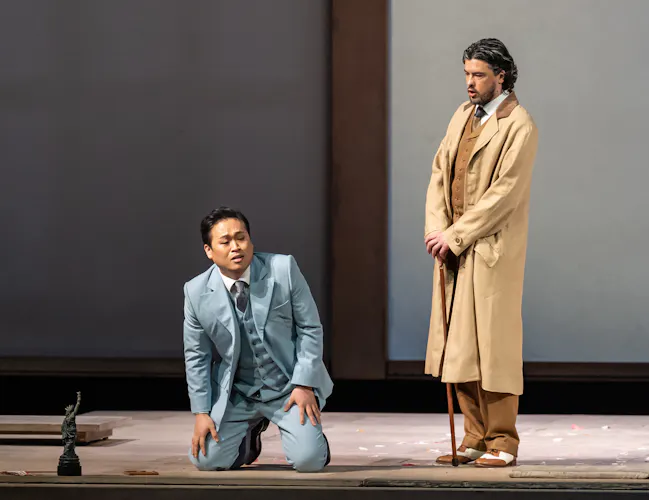
Eternal longing for a love lost in Puccini's devastating opera. A standout triple cast includes Elena Stikhina, Hrachuhí Bassénz and Asmik Grigorian as the innocent and idealistic Cio-Cio-San and Saimir Pirgu, SeokJong Baek and Joshua Guerrero as her callous lover. Henrik Nánási conducts.
Not yet on sale
General booking opens on 10 February 2027
Priority booking dates
Dates
Location
Approximate timings
The performance will last approximately 2 hours and 40 minutes, including one interval.
Accessibility
- Audio Described
- Captioned
- BSL Interpreted
- Touch Tour
Expand all dates
Sunday 4 July, 3:00 pm
Monday 5 July, 11:30 am
Tuesday 6 July, 7:30 pm
Guidance
Parental guidance recommended.
This performance contains stylised depictions of suicide. There are references to imperialism and colonialism throughout.
Language
Sung in Italian with English surtitles, which are displayed on screens above the stage and around the auditorium.
Generous support from
Exceptional philanthropic support from
Royal Ballet and Opera Principal The Julia Rausing Trust
Generous philanthropic support from
David and Molly Lowell Borthwick
Schools' Matinees are generously supported by
Schools' Matinees are generously supported by The Taylor Family Foundation, The Gerald and Gail Ronson Family Foundation and David and Molly Lowell Borthwick
Production generously supported by

Co-production with
Gran Teatre Del Liceu, Barcelona
Synopsis
The story of Madama Butterfly
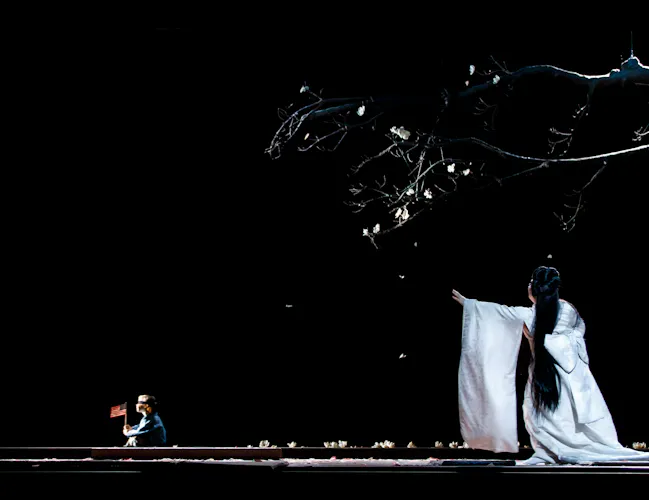
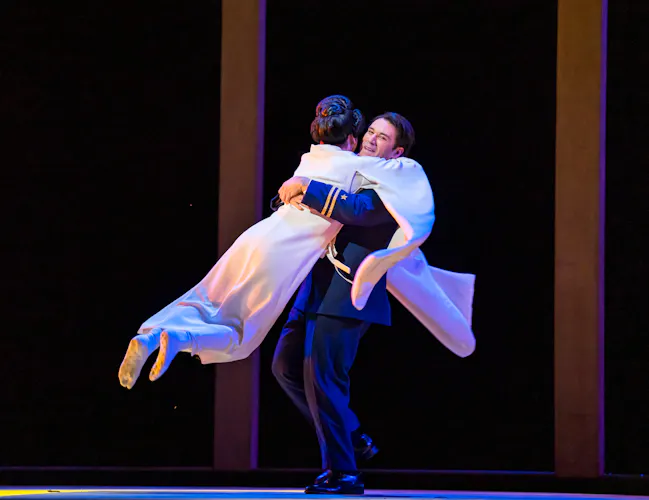
When young geisha Cio-Cio-San marries American naval officer Lieutenant Pinkerton in Nagasaki, Japan, she believes they are making a binding promise for life. Soon after, Pinkerton departs for the US. Years pass with no sign of his return, but still Cio-Cio-San waits, longing for the day his ship will sail into the harbour.
Read the full synopsis
Creatives
The artists and creatives behind the production
Music
Libretto
Directors
Set Designer
Costume Designer
Lighting Designer
Discover
Puccini’s Madama Butterfly remains a deeply moving – and troubling – story, fatally bound up with the destructive forces of imperialism. With a breathtaking score that includes Butterfly’s aria ‘Un bel dì, vedremo’ (‘One fine day’) and the famous Humming Chorus, the enduring work is as entrancing as it is heart-breaking.
The Making of a Classic
The history
Puccini was entranced by David Belasco’s play Madame Butterfly (based on a popular short story by John Luther Long) when he saw it in London in 1900. He collaborated with librettists Luigi Illica and Giuseppe Giacosa (with whom he had created La bohème and Tosca) to adapt Cio-Cio-San’s tragic tale for the operatic stage. Although the premiere at La Scala, Milan, in 1904 was poorly received, that same year Puccini revised and restaged the opera for performances in Brescia, to great acclaim. Madama Butterfly quickly became a hugely popular opera with performers and audiences alike, and remains one of Puccini’s best-loved works.
Love transcending borders
The music
Puccini drew on Japanese folk melodies for the score, one of his most evocative and atmospheric. In Act I, Cio-Cio-San expresses her radiant happiness in ‘Ancora un passo’, and she and her beloved Pinkerton rapturously declare their love for each other in the passionate duet ‘Viene la sera… vogliatemi bene’. In Act II, set three years later, the dominant mood is one of yearning; in her Act II aria ‘Un bel dì vedremo’ Cio-Cio-San longs for the ‘fine day’ when her husband will return to her.
To find out more about Madama Butterfly and its history at the Royal Opera House read The Evolution of Butterfly.
Aria highlight: 'Un bel dì vedremo'
Gallery
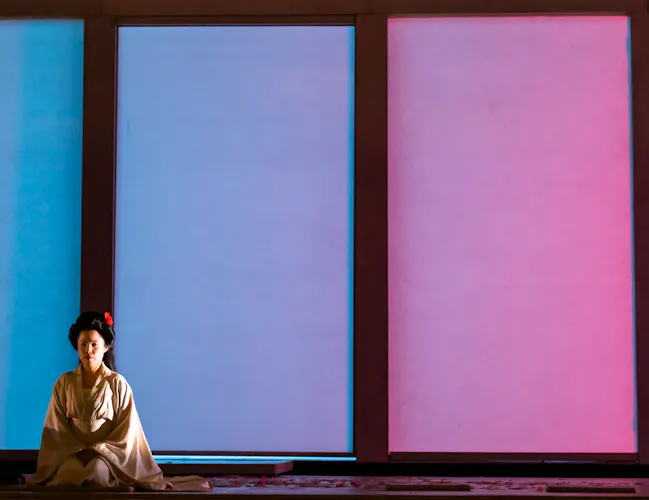
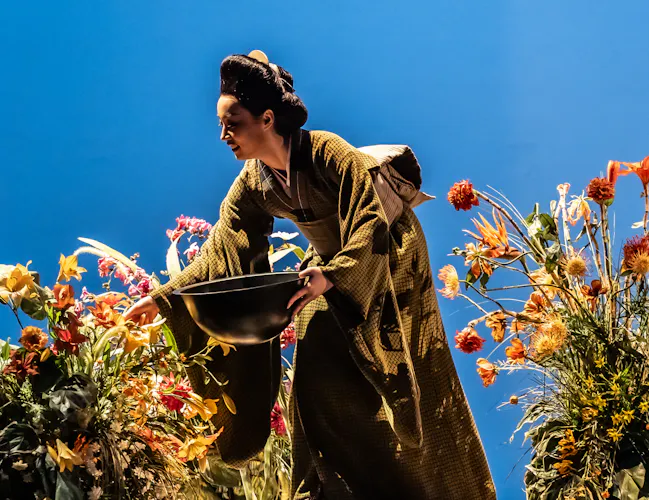
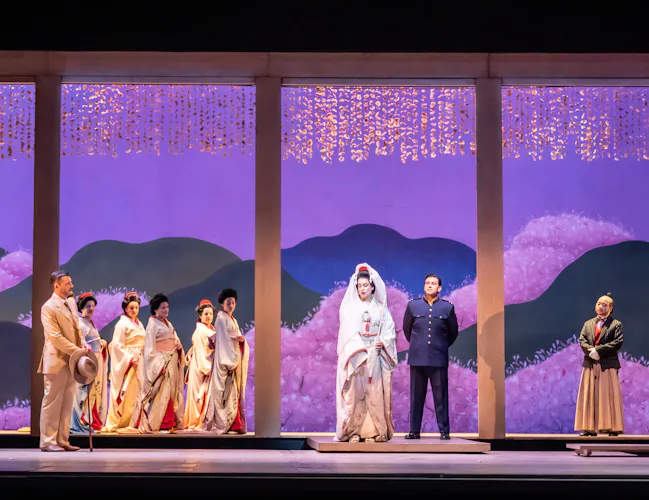
Accessibility and resources
There is lift access and step-free routes to over 100 seats in the Stalls Circle, Balcony and Amphitheatre. There are 10 steps or fewer to some seats in the Stalls Circle, Balcony, Amphitheatre and the Donald Gordon Grand Tier. All seats in the Orchestra stalls are accessed by 9 steps or more.
We have an assistive listening system available to use. Surtitles, captions and translations in English are displayed on screens above the stage and around the auditorium.
Join our Access Scheme for priority access to tickets and to inform us of your access requirements.
See our Accessibility page for more information or view a visitors guide (PDF, 12.0 MB).
Be the first to know
Sign up to hear the latest Royal Ballet and Opera news, receive ticket alerts, and discover how to support us.