Ticket price
*Young RBO ticket prices for selected performances
Dates
Location
Approximate timings
The performance lasts about 3 hours and 30 minutes, including one interval.
Act I:
1 hour 35 minutes
Interval :
30 minutes
Act II:
1 hour 25 minutes
Expand all dates
Cast changes
Please note there are details about cast changes on:
12, 15 October 2026.
Check below to find out more.
Monday 12 October, 6.45pm
Thursday 15 October, 6.45pm
Guidance
Suitable for ages 8+
This production contains themes of violence and sexual harassment. There are strobe effects throughout.
Language
Sung in Italian with English surtitles, which are displayed on screens above the stage and around the auditorium.
Generous support from
Exceptional philanthropic support from
Royal Ballet and Opera Principal The Julia Rausing Trust
Generous philanthropic support from
David and Molly Lowell Borthwick and The Jean Sainsbury Royal Opera House Fund
Co-production with
Gran Teatre Del Liceu, Barcelona, the Israeli Opera and Houston Grand Opera
Synopsis
The story of Don Giovanni
Don Giovanni seduces and deceives women with no remorse. What he wants, he takes. What’s in his way, he destroys. But when one of his conquests leads to murder, Don Giovanni’s arrogance and manipulation begin to catch up with him, his string of reckless seductions culminating in a terrible reckoning.
Read the full synopsis
Creatives
The artists and creatives behind the production
Libretto
Director
Set Designer
Costume Designer
Lighting Designer
Video Designer
Choreographer
Discover
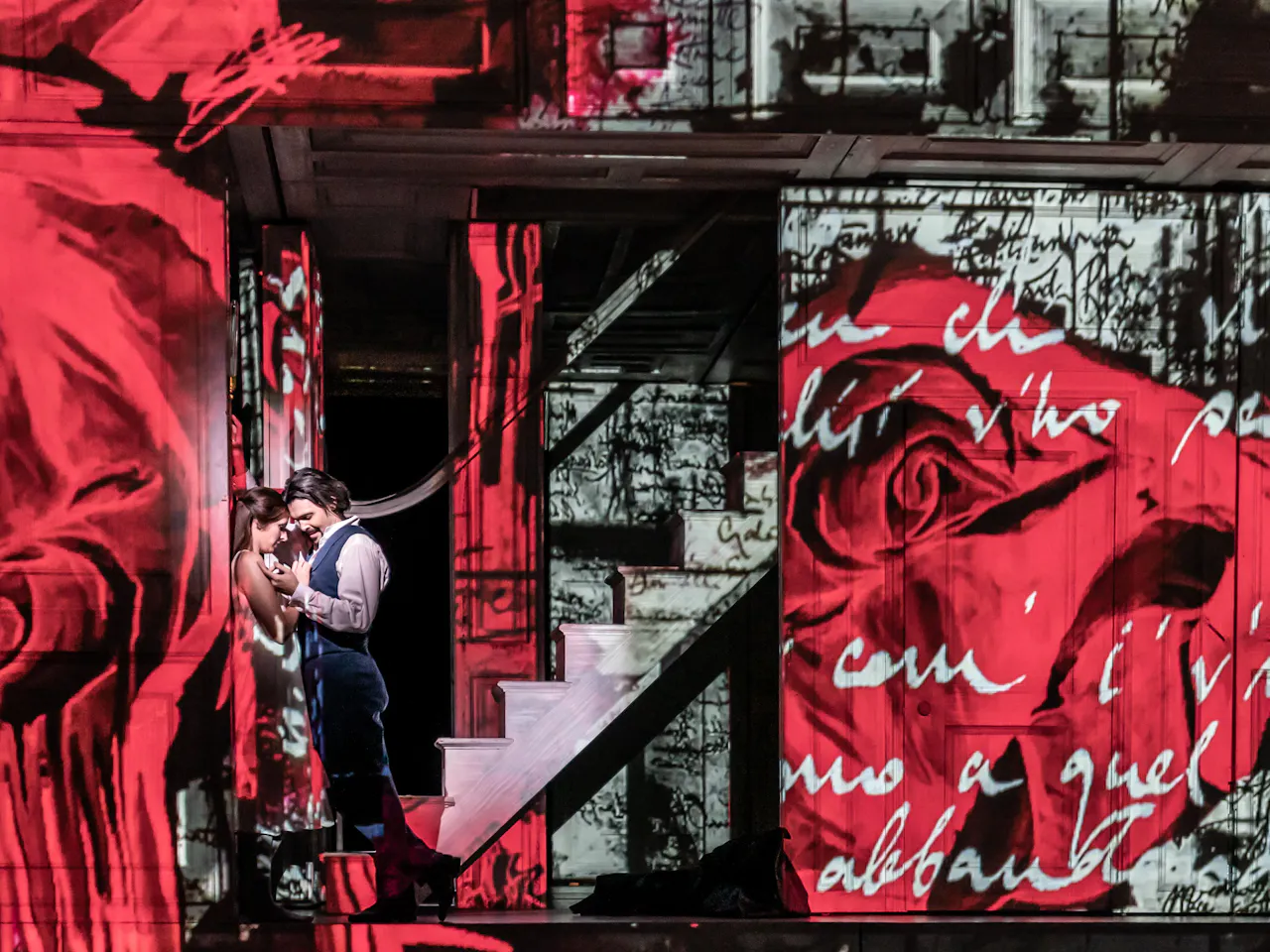
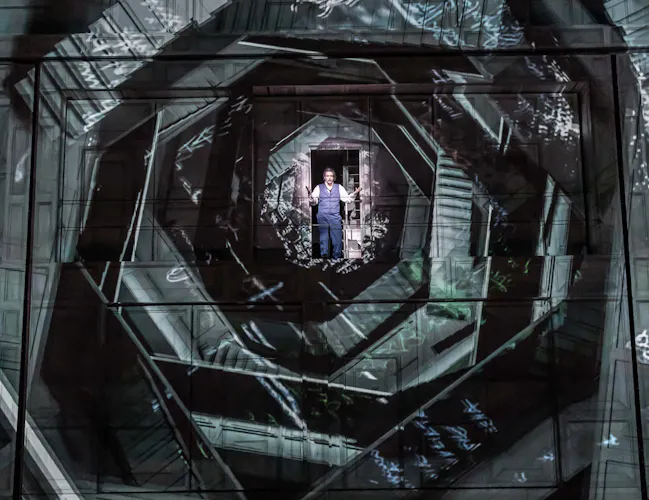
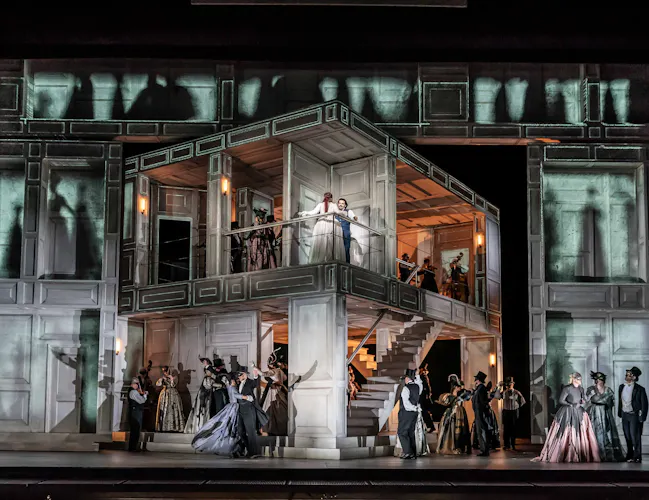
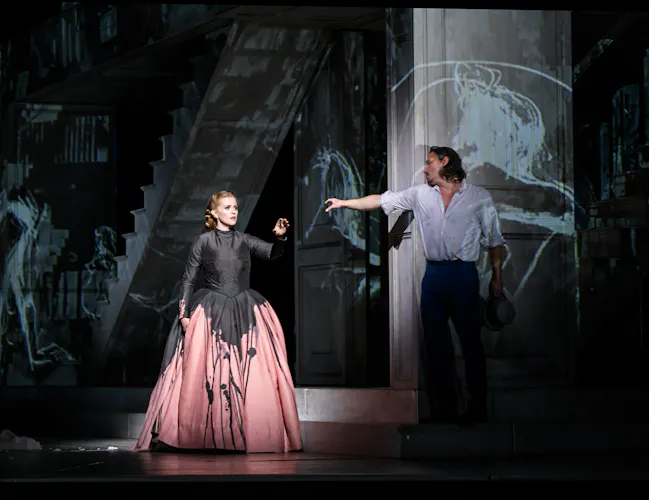
Kasper Holten’s beautiful production captures the debauchery of desire, while also illuminating the sharp emotional tension that cuts through Mozart’s darkest opera. Acclaimed designer Es Devlin’s spectacular visuals blur the boundaries between reality and the twisting interior world of the infamous Don.
A new commission
The history
Following the popular premiere of Mozart’s previous opera, The Marriage of Figaro, in Prague, the theatre’s impresario sought to commission the composer for a new opera. Don Giovanni was the second collaboration with Mozart’s would-be longtime librettist Lorenzo Da Ponte, who decided to adapt an existing libretto on the subject of Don Juan, the notorious Spanish libertine of fiction. For Mozart, Don Giovanni was an unusually intense work, especially following the comedic fare of Figaro – still, the opera became another great success in Prague, remaining in repertory there for many years. For more on the Mozart - Da Ponte collaboration, visit our Mozart Essentials page.
A popular subject
The inspiration
The character of Don Juan first appeared in the 1630 play El burlador de Sevilla y convidado de piedra (The Trickster of Seville and the Stone Guest) by Tirso de Molina, about a man whose life is devoted to seduction. Today, the name has become synonymous with any womanizer, the figure of Don Juan inspiring countless iterations, including Mozart’s infamous Don. Other popular adaptations of the story include Molière’s 1665 play Dom Juan, Lord Byron’s satirical epic poem Don Juan and several films ranging from Adventures of Don Juan with Errol Flynn (1948) and In Don Juan, or If Don Juan Were a Woman (1973), featuring Brigitte Bardot as a female version of the character, to Don Juan DeMarco (1995), starring Johnny Depp and Marlon Brando, and Don Jon (2013), with Joseph Gordon-Levitt as the title character. Many others have been influenced by the subject of Don Juan, too, including the writers Jane Austen, Søren Kierkegaard and Albert Camus, the composer Jean Sibelius (whose second movement of his Symphony No. 2 is based on the play’s climax) and filmmaker Ingmar Bergman.
A catalogue of arias
The music
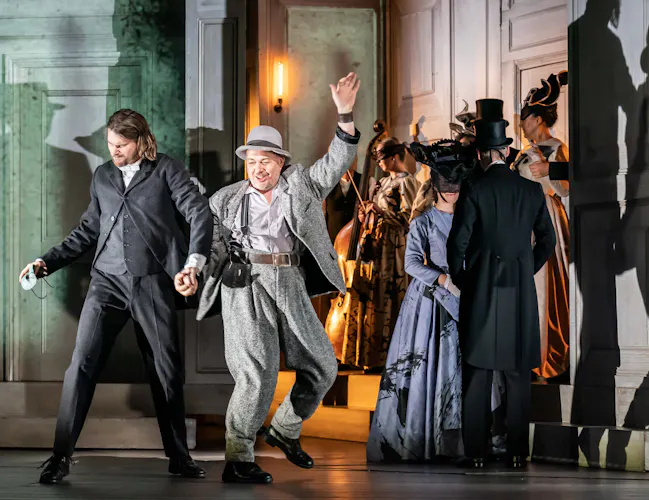
Mozart’s dazzling score is full of beauty and invention, ranging from gorgeous arias and dramatic duets to the intricate layering of dance melodies that bring Act I to a virtuoso close. The score also brilliantly mirrors the action on stage. Listen out for Leporello’s famous Catalogue Aria (‘Madamina, il catalogo è questo’) in Act I, where Don Giovanni’s servant recites entries from his little black book, cataloging the countless women his master has seduced – an astonishing 1,003 in Spain alone. Using brief, light notes to depict petite women and sustained note values for those of grandeur, Mozart brings Leporello’s accounts to life through the music. A fitting counterpart to the Catalogue Aria, Don Giovanni’s spirited Champagne Aria (’Fin ch’han dal vino calda la testa’, or ’Til they are tipsy’), also in Act I, sees the nobleman cheerfully – and at breakneck speed – instruct his dependable foil to organise a wild party for the evening, insisting that Leporello invite every woman he can find.
Aria highlight: Leporello's 'Catalogue Aria' (Catalogue song)
Gallery
Accessibility and resources
Listen to the audio guide for Don Giovanni on SoundCloud.
There is lift access and there are step-free routes to over 100 seats in the Stalls Circle, Balcony and Amphitheatre. Some seats in the Stalls Circle, Balcony, Amphitheatre and the Donald Gordon Grand Tier are accessed by 9 steps or fewer. There are 10 steps or more to access seats in the Orchestra Stalls.
You can use the assistive listening systems in our auditoriums. Surtitles, captions and translations in English are displayed on screens above the stage and around the auditorium.
Join our Access Scheme for priority access to tickets and to inform us of your access requirements.
See our Accessibility page for more information, view a visitors guide (PDF, 12.0 MB) or watch a subtitled guide to The Royal Opera House on YouTube.
Be the first to know
Sign up to hear the latest Royal Ballet and Opera news, receive ticket alerts, and discover how to support us.